Three quarters of the children placed in residential care in Ireland live in commercial accommodation. Investors have entered this growing industry, where inspections of the largest owners’ children’s homes show a mixed record.
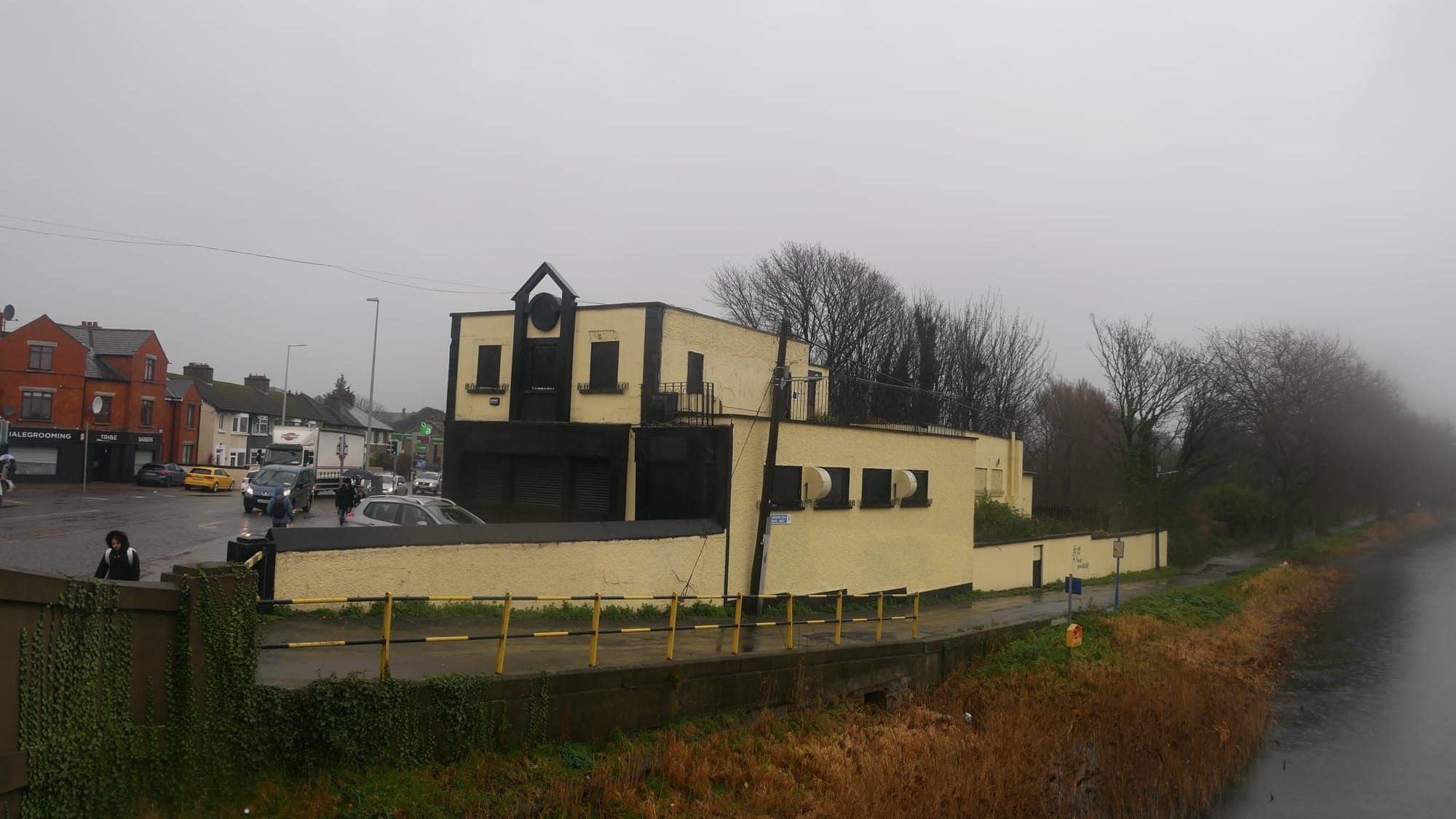
There’s a health-and-safety form screwed to the black hoarding around Glebe House in the middle of Crumlin village.
It’s dated April 2024.
Exactly when construction was due to start on the big site behind is “TBC” the poster says. But once the diggers and hard hats get stuck in, it should take about 80 weeks, it says.
At the start of the following May, developer Michael Moran filed a seven-day commencement notice with Dublin City Council for 145 apartments on the site.
Those apartments are to be a split of cost-rental and social homes, say planning documents, and to be built under a deal between Circle VHA and Seabren Developments Ltd, of which Moran is director and owner.
They would be done by the second half of last year, estimated a council report from that October.
But in the early afternoon on Thursday, the site was a muddy field around the old broken-roofed heritage building, scattered with a few orange cones and a big blue storage container– with no active construction.
A spokesperson for Circle VHA says the commencement notice was filed ahead of “enabling and preparatory works”. Those works have been done, they said.
The plan currently is to move to the full construction stage in the second quarter of this year, said the spokesperson.
“As with many large-scale residential developments in the current economic environment, progressing into the full build phase is dependent on securing and sequencing several funding streams,” they said.
With planning permission in place – albeit after a fractious process, and court appeals – and services, the site at Glebe House in the heart of a residential neighbourhood is just the kind of development that the government measures such as the development levy waiver, and the Residential Zoned Land Tax (RZLT), are in place to activate and accelerate.
But the work has been stop-start, and slow, highlighting the limits of those housing-activation measures.
Moran, the director of Seabren Developments, says that he had filed the commencement notice in May 2024 and they had started the work as they had been confident that funding through the government’s CALF scheme was to come through shortly.
But “there were delays in the CALF decision arising”, he says.
Under the Capital Assistance Leasing Facility (CALF), the state provides a loan to cover up to 30 percent of the capital costs of a social housing project, with the remainder of finance sourced elsewhere – usually from the Housing Finance Agency.
Moran says his model isn’t to sit on land and he has been working to get the project done and dusted.
His expectation and hope is that the CALF funding is approved shortly, he says, with builders back on site in April. “If I’m glass half-full.”
Part of the spike
The commencement notice filed in May 2024, was among the wave of notices filed over the course of that year.
In November of that year, there was a general election in which the question of which party could get more homes built was a key issue.
Across the four Dublin authorities, developers filed commencement notices for 13,593 homes in 2023, which leapt to 24,954 in 2024 and plummeted to 5,074 last year.
Spikes in the notices in April and September were triggered by deadlines to cash in on the government’s development levy waiver, and Uisce Éireann connection charge rebate.
Works had to start by the end of December 2024 to benefit from the development levies waiver, a timebound exemption from the contribution that developers usually have to pay to help cover the costs of roads, services and so on that any future homes would get to use.
They also had to start by September 2024 to get the connection charge rebate, a refund of the fee they have to pay to hook up developments.
In both cases, to qualify, homes have to be built by the end of this year.
Meanwhile, the government’s Residential Zoned Land Tax (RZLT) also kicked in, from February 2025.
But the tax can be deferred if a commencement notice has been filed – and works started. Also, if the development is completed before a planning permission expires, the tax doesn’t have to be paid – but planning permissions can be extended.
The planning permission being built out at Glebe House, which was first granted in October 2022, expires in December 2027.
Moran says that the RZLT hasn’t really been a consideration for him, because he hasn’t been sitting on the land and is trying to push it forward – since before the tax was even invented.
“It hasn’t really, I suppose, featured in my thought process,” he said.
Developing the site has been lengthy, he says, because two of the three planning permissions that he put in were subject to judicial review, the funding has been bureaucratic, and the land-owning is more complex as the site is split between his portion and council-owned smaller bits.
At the time of the legal challenges, some local councillors said they blamed the government’s changes to planning processes for big developments for the delays – as it cut out opportunities for local residents to feed in and improve plans, without turning to the courts.
There should be provision in the law for the RZLT for how long a gap there can be between rounds of works, before the tax kicks in again, says Green Party Councillor Ray Cunningham.
“You’d want there to be some time limit. If you do enabling works, how long does it keep you off the tax?” he said.
Guidance from the Revenue says that any deferred RZLT becomes due if works “permanently cease” without a “certificate of compliance” being lodged, or if the planning permission expires without a “certificate of compliance” lodged.
About 20 percent of the returns for the Residential Zoned Land Tax filed by landowners with Revenue included a self-declared deferral of the tax on the basis that work had commenced, show official figures.
A spokesperson for Revenue said that it had started to carry out compliance checks on RZLT returns filed so far, assessing on a case-by-case basis.
Due to start?
It’s too early to really get a sense of what the impact of the RZLT is and will be, says Alexia O’Brien, housing policy advocate with the Jesuit Centre for Faith and Justice.
But “I am intrigued to follow up and see all these places that have been taxed,” she says. “Is this really giving them a kick to start moving?”
North of Glebe House, out of Crumlin, through Drimnagh and on the edge of Inchicore sits the old Blackhorse Inn.
The Blackhorse Inn. Photo by Lois Kapila.
Dublin City Council expects to get five social homes as part of a larger planned development on this site, a recent report says. The Blackhorse Inn homes should be done by the middle of next year, says the list.
Permission had been due to expire in July of this year. But in September last year, it applied for a three-year extension to the planning permission.
Development hadn’t started, the planners’ report said. The applicant had explained that this was because of “prevailing market constraints which rendered delivery unviable over the past number of years”.
It blamed the “significant increase in interest rates and the effective withdrawal of the Private Rented Sector (PRS) funding model”, the report says.
However, “the outlook for delivery has now materially improved, with interest rates beginning to ease and Approved Housing Bodies (AHBs) successfully funding arrangements to provide a more secure pathway for construction”, they said.
“The details submitted indicate that construction works will commence following the extension of duration application,” says the planners’ report.
The planning extension was granted in November, giving the landowner until August 2029.
Last Thursday, there was no activity yet at the Blackhorse Inn. A few cars had pulled up on the sprawling tarmac to the side of the boarded-up pub, an area used as an informal car park and swing-around spot for lost drivers.
Nobody at Alanna Homes replied to queries about when the company plans to start work on the site, or about the RZLT.
In 2023, the developers had appealed Dublin City Council’s decision to include the site on its draft RZLT map – but that wasn’t upheld by An Bord Pleanála.
O’Brien, the housing policy advocate, who co-authored a recent report “Using the Kenny Report to End Land Hoarding” says that she wonders whether the rate of the RZLT, at 3 percent of the land’s value, is big enough a stick.
There’s something of a data gap in Ireland around land values. But if land values were to rise 5 percent a year, then a landowner could still come out in the black, she says.
More broadly, her report suggests a much more fundamental fix to idle land and unaffordable homes. “A huge problem needs a huge solution,” she says.
If land qualifies for the RZLT, then councils should be empowered to compulsorily purchase it – as they can and sometimes do with vacant and derelict properties, she said.
How fast councils would move themselves to build out the land is questionable. Dublin City Council can sit on derelict properties for years, as officials handle legal challenges, or wonder about funding projects.
But the government has made it a point in its housing plan that it needs to be building more social and affordable housing, says O’Brien.
So, this could be another mechanism, she says, ensuring that councils have the land, and then can have at it. “You’ve said this is important so now pony up.”
Three quarters of the children placed in residential care in Ireland live in commercial accommodation. Investors have entered this growing industry, where inspections of the largest owners’ children’s homes show a mixed record.