
Why is the council sitting on long-vacant and derelict buildings?
Is the issue paperwork? Attention and will? Money? The department?
However, councillors disagree over whether rezoning more land will actually lead to more housing being built.

Fingal County Council has proposed rezoning 61.5ha across 11 sites in north Dublin – with room, if developed, for 2,500 homes.
Nine of the parcels are in east Fingal – on the edges of Balrothery, Skerries, Lusk, Malahide, Kinsealy, and next to the Hole in the Wall Road near Snugborough.
The other two are in Dublin 15, with one site west of Barnill and another on Clonsilla Road.
The council has also suggested steps to move faster with developing some of the lands at Dunsink, long earmarked for development, to allow – in theory – another 2,500 homes to be brought on stream by 2029.
It has put these proposed rezonings out for a public consultation running from 23 December to 29 January.
Guidelines issued by Minister for Housing James Browne, a Fianna Fáil TD, last July mean that councils have had to reopen their development plan and ensure that there is enough land rezoned to meet new housing targets – and 50 percent more, to give headway.
At Fingal’s December monthly meeting, the council’s chief executive, AnnMarie Farrelly, said it was on the hunt for lands to rezone to meet the new target. Now the council has come through with the specifics.
"Overall, I think it's a positive and reasonable proposal by Fingal County Council, and I would, I certainly support," said Labour Councillor John Walsh. This variation to the county development plan "is probably most important decision that will be taken by the current council", he said.
The rezonings proposed by Fingal officials sit mostly on the edges of settlements, with seven nibbling into greenbelt.
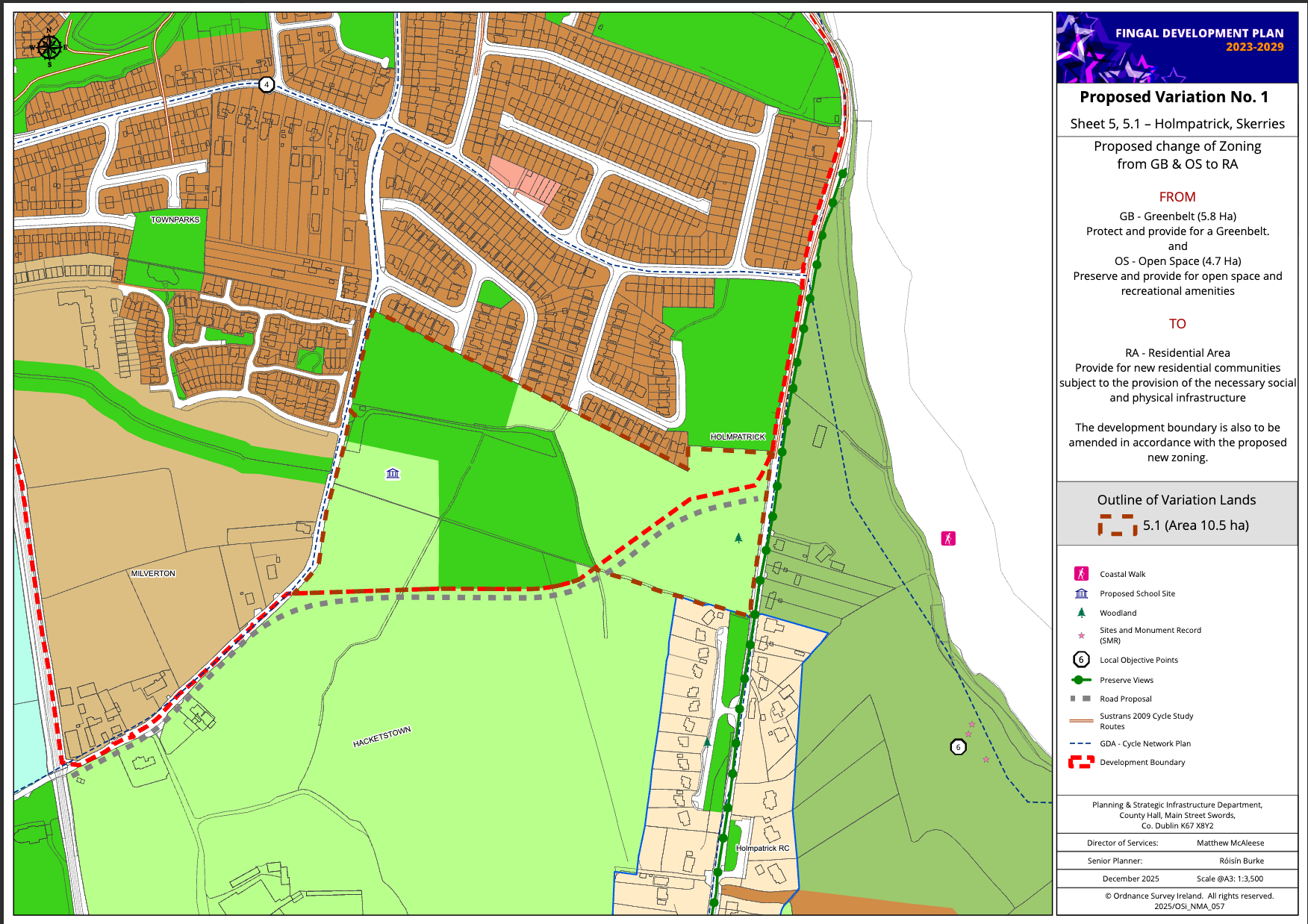
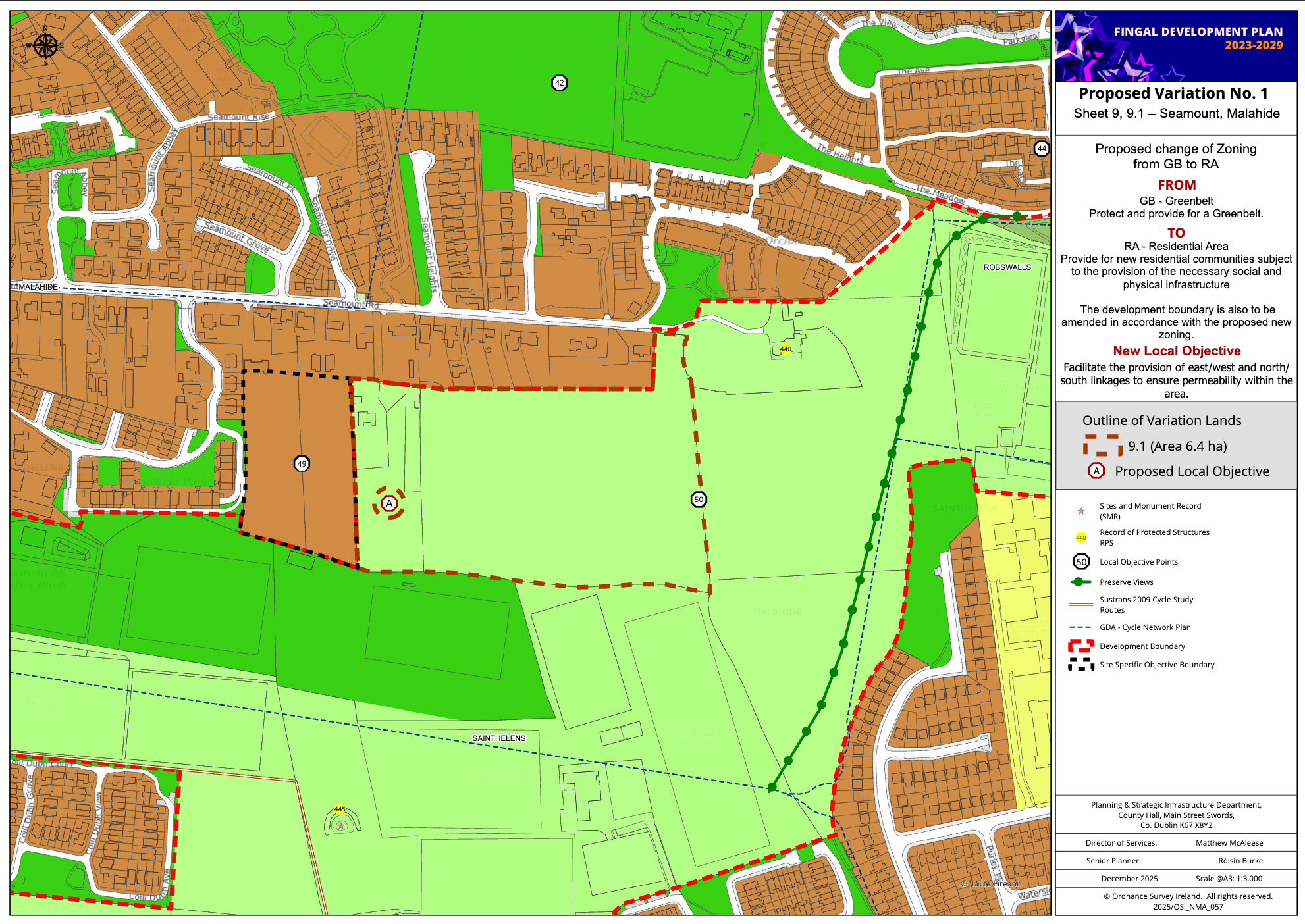
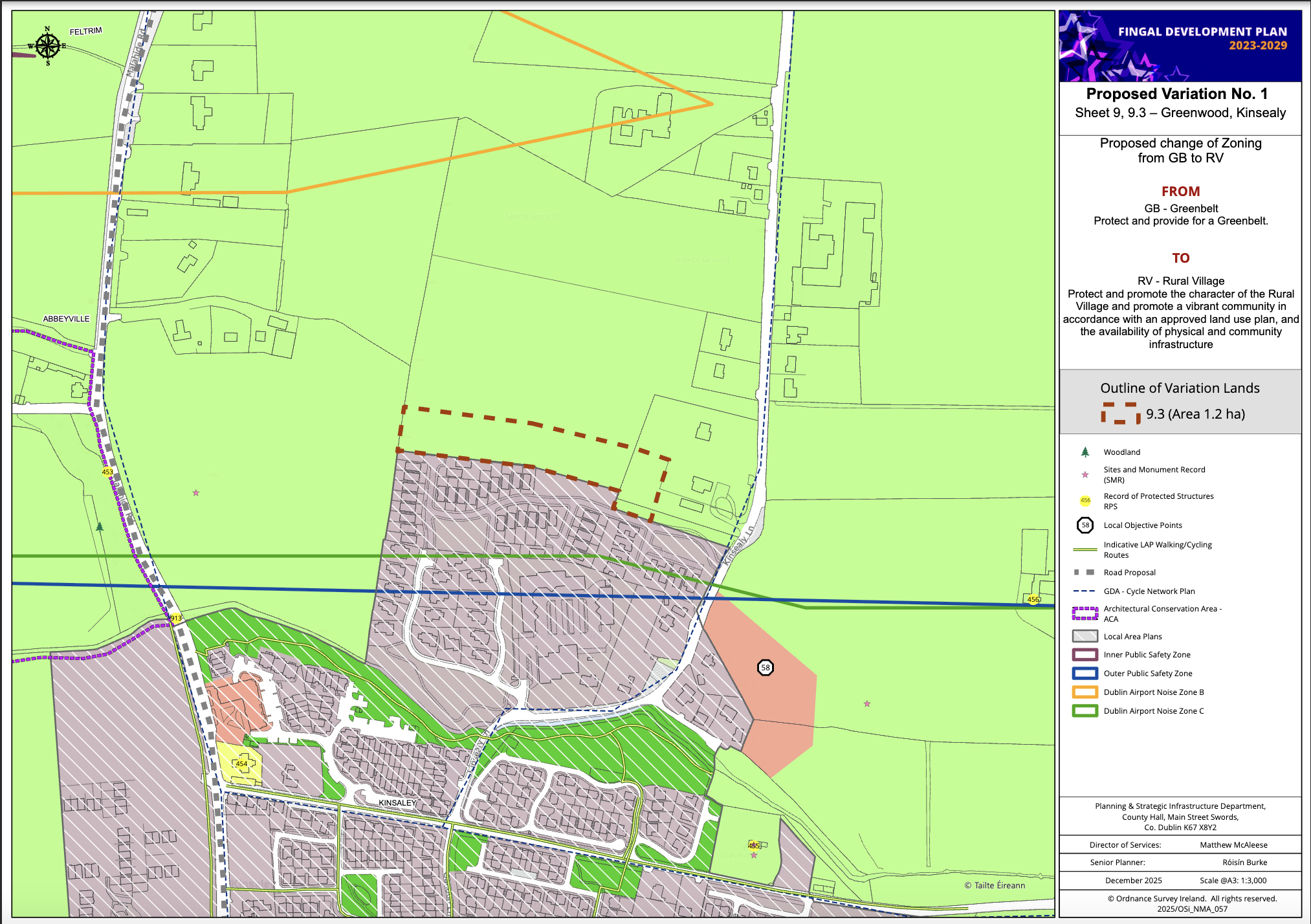
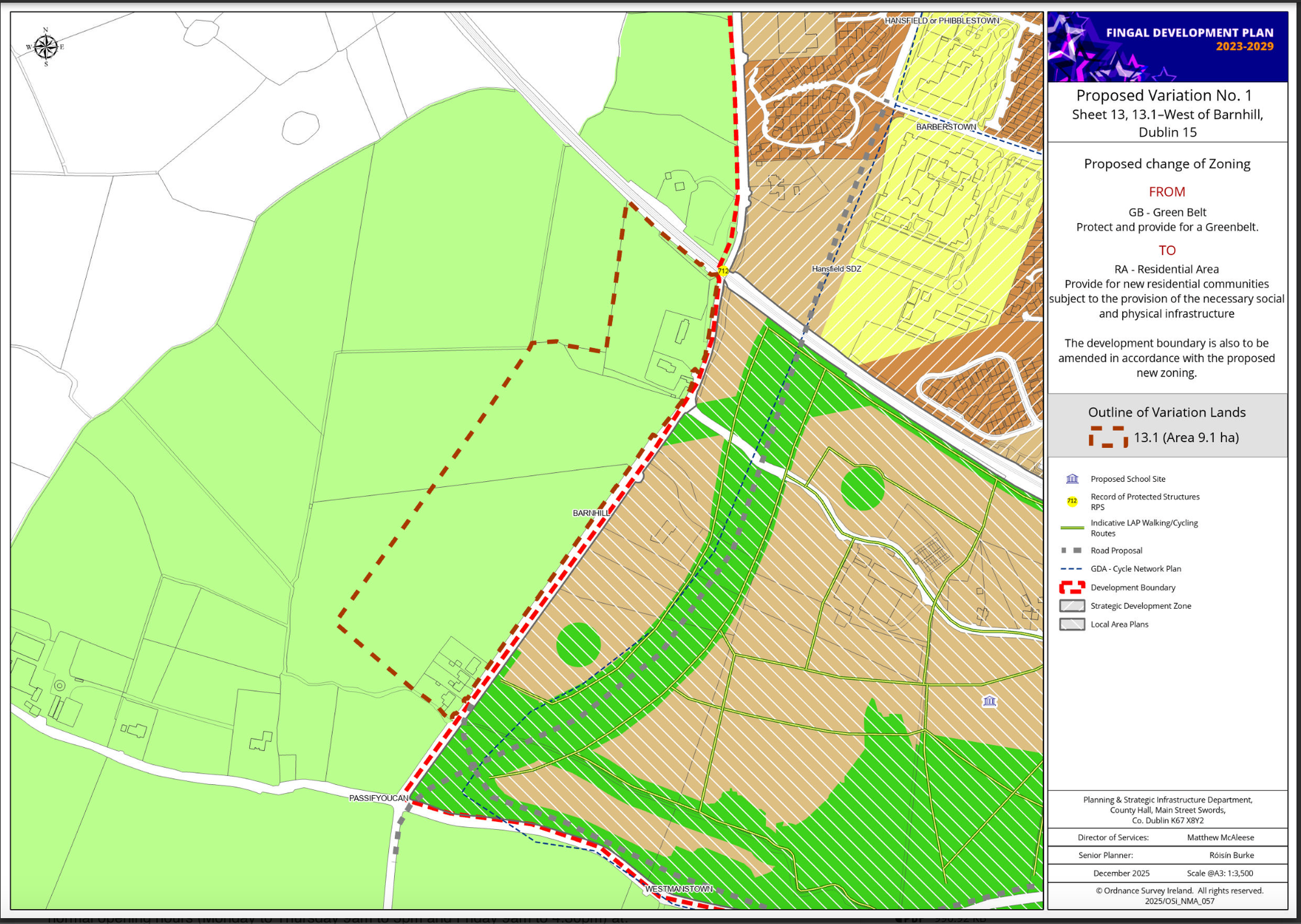
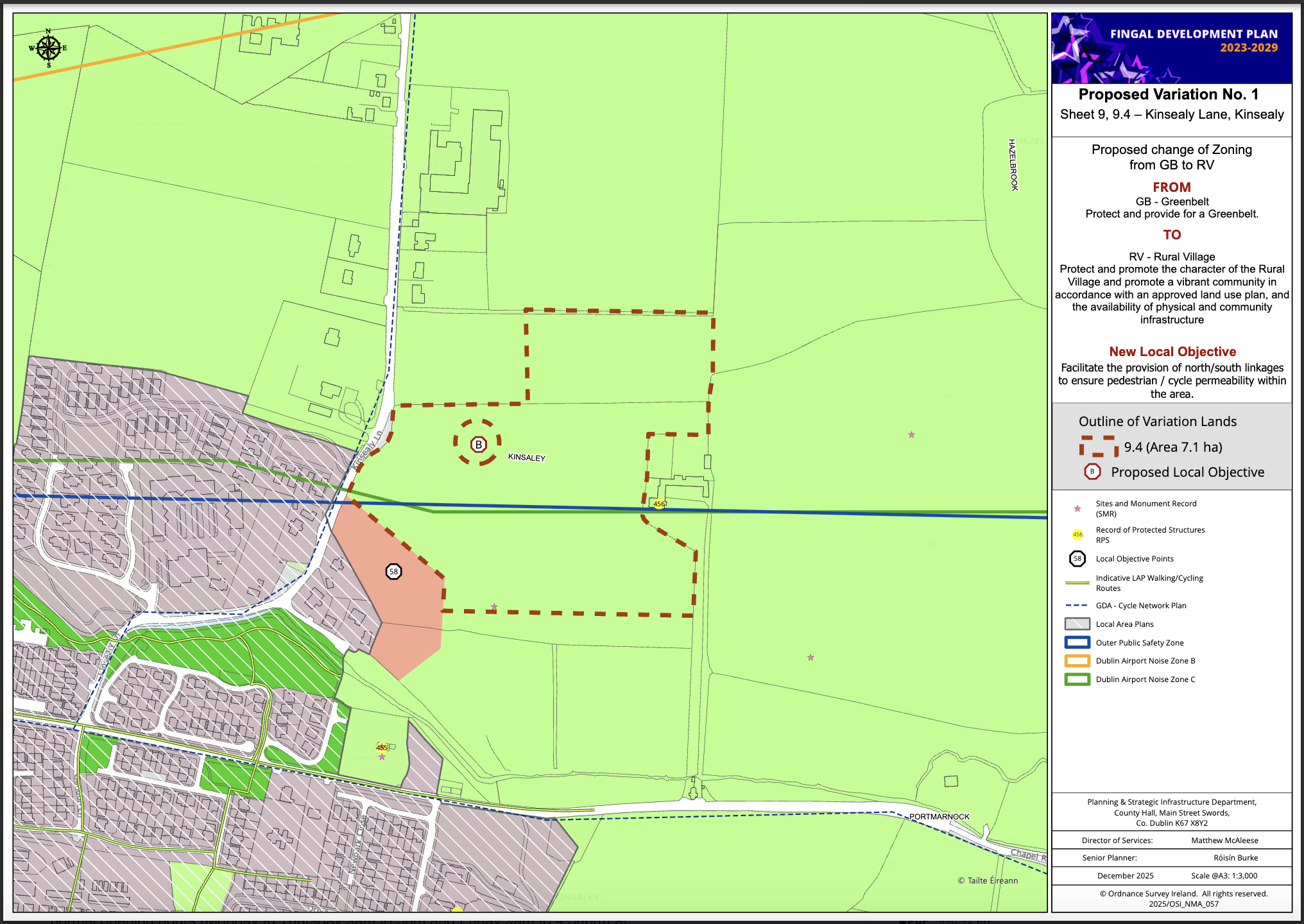
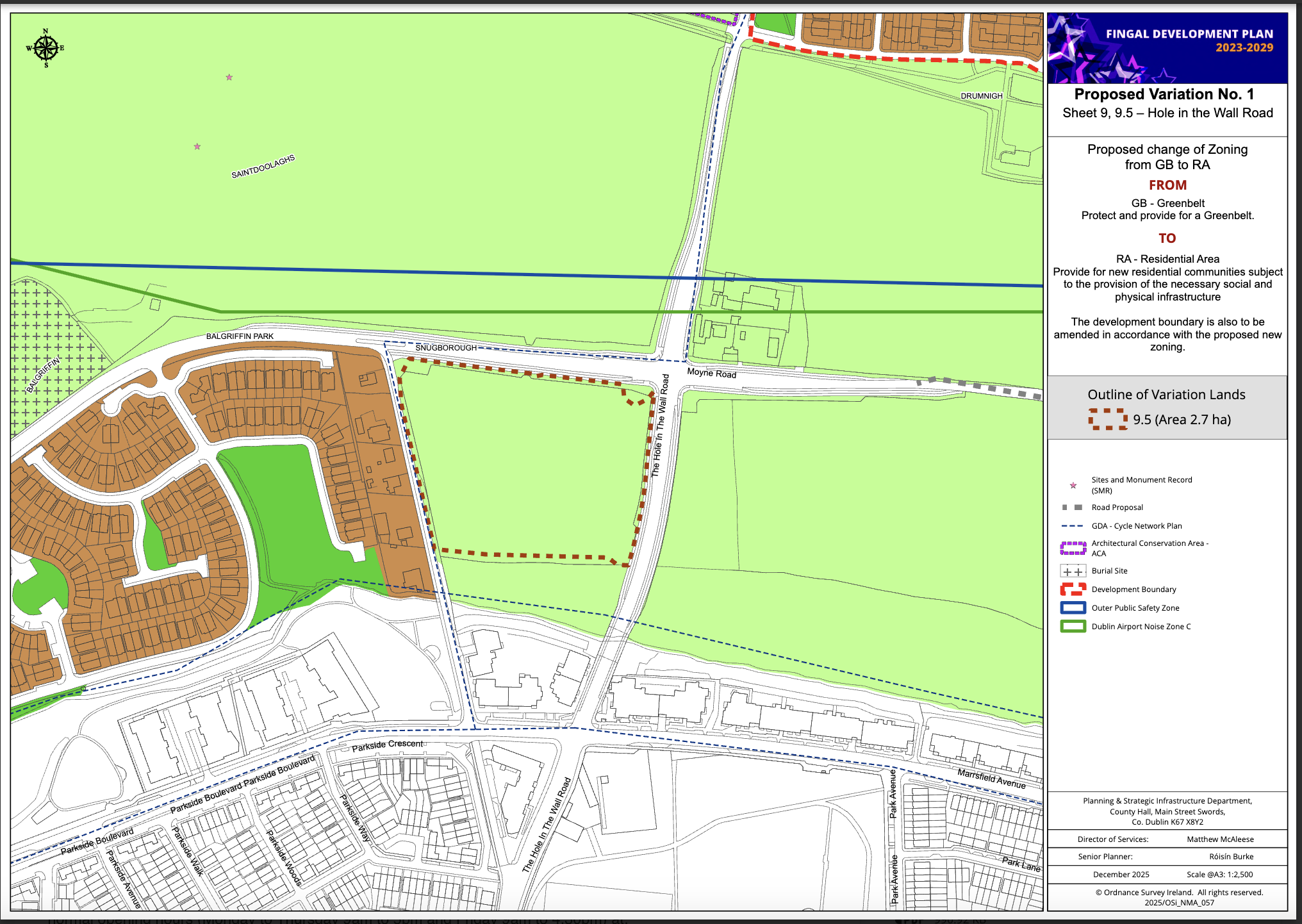
The proposed encroachments into greenbelt surprised Green Party Councillor David Healy, he says – and concern him. “I don’t know what the thinking is behind it, and they haven’t given any attempts to explain it, like you would expect.”
Green belt zoning had always been seen as a permanent designation, to separate towns, he said.
“So that the towns of Portmarnock, Kinsealy, Malahide, Baldoyle, and Balgriffin are separate towns,” he said, “and Dublin isn’t just a kind of endless built-up area.”
His immediate response to the proposals is to want to go back to basics, he says – to the question of whether these are really necessary, and so to the question of how officials have calculated what land is available right now.
It isn’t in itself unreasonable to ensure there are sufficient lands zoned for the new targets under the National Planning Framework, he said.
But officials had briefed councillors that there is 173ha of land already zoned, but exempt from the Residential Zoned Land Tax (RZLT). “Because for most, for almost all of it, it’s not adequately serviced,” he says.
So, that land isn’t counted as ready to build on, he says, but could account for at least 7,000 homes.
“The first question I suppose I have to them, and I’ve been asking it for a few weeks, is can we have a list of all the pieces of land from those 173ha – because many of those, you know, if any of those can be easily serviced, that would be the immediate response,” he says.
If a third of that land could be made developable quickly, that would meet the need to rezone any land other than Dunsink, he said.
He isn’t sure, also, how officials have taken mixed-use zonings into account, he said.
Take the Blanchardstown Shopping Centre, he said, where planners have granted two planning permissions for 1,319 homes.
He doesn’t think that land is included as falling under the RZLT – but he didn’t see that on the map. “So I’m not clear as to whether they’ve counted that into their calculation of land that’s zoned and developable,” he says.
But, again, that would make up more than half of the new homes that they would be proposing to zone more space for, Healy says.
To him, it looks as if they could be proposing to rezone land which they don’t need to, he says.
Healy says councillors for his area are also hoping to look at which sites were already proposed for zoning by the council and rejected on the advice of the chief executive, and work out why there has been an aboutface now.
Labour Party Councillor Brian McDonagh said that, when Fingal’s current development plan, for 2023 to 2029, had just come out, the national planning regulator told the council it had overzoned land.
“Now, less than two years later, they’re coming back and saying we don’t have enough zoned land,” McDonagh said.
“I wouldn’t be opposed to zoning some of these lands,” he says. “Some of what we’re doing is actually reasonable,” he says.
There’s a site at Broomfield West in Malahide, which makes a bit more sense to him but he plans to look more closely at it, he says. “I think there’s an opportunity for social and affordable housing there which is badly needed.”
But he would be most worried, he says, about the proposals around Kinsealy. “I’m very concerned about Kinsealy,” says McDonagh.
He was opposed to how that was rezoned during past development plans, he said, as a rural village, which meant that it didn’t develop with the same connectivity and infrastructure.
It led to issues with no cycleway and no assigned school, he said. “So there’s huge pressure there.”
He also has concerns about flooding, not necessarily on the land rezoned, but in the wider area from the reduced porous land, he says.
Overall, he is worried that the sites being put forward aren’t being done on the basis of any long-term strategic plan for areas but for the numbers, he says. “It’s just demonstrating busy activity by the government.”
Other councillors said that they were yet to look in detail at the lands up for rezoning, but are broadly of the view that rezoning more land is needed and so supportive of the whole sweep – arguing that it opens the possibility of more homes being built.
Ted Leddy, a Fine Gael councillor, said that the proposed rezoning for Barnill – in his area – is a good idea. “I’m very much in favour of that being rezoned for housing.”
Since at least September 2024, councillors have themselves in earnest been pushing for faster development of lands at Dunsink – where the council owns as much as 1,000 acres.
The proposals now being put forward by council officials – and also out to public consultation – include moving that along faster and drawing up a local area plan so it can develop at least part of that quickly.
"By March [20]26 the council should see a draft local area plan for Dunsink, and that means, that gives us the opportunity to shape the plan for the new urban quarter, and it will ensure, it should ensure that it's an infrastructure-first development," said Walsh, the Labour councillor.
Yes, said his Labour colleague, McDonagh, “That’s going to be a big development. In 25 years’ time, that should be a big, huge, new properly planned town.”
Dunsink is council land. But it’s unclear who owns the other sites that are proposed for rezoning, says Social Democrats Councillor Joan Hopkins – and something she would be interested in.
For lands in private ownership, councillors are split on the question of whether rezoning the land alone would be enough to get new homes built anyway.
Leddy, the Fine Gael councillor, said that so many factors have to align for housing to be ready to built on a plot so not everything is going to be built out.
It is often said that Fingal has enough land, Leddy says. “But we don’t have enough land, because if we had enough land, we would be getting enough houses built and there would be less of a shortage of housing.”
McDonagh, the Labour councillor, says that the government seems to be working off a fundamental misunderstanding of what the problem is – and the assumption that if you rezone land, development will follow.
But “there’s very little to drive development by the private sector when they’re the ones that own and control the land,” he says.
Yes, said Walsh, another Labour councillor, "the minister seems to think that rezoning more land will solve the housing crisis", but "there's actually no problem with the availability of land across the county, in fact, the problem is much more that existing zoned land hasn't been developed for housing".
Tom O’Leary, the Fine Gael councillor and current mayor, says he wants to see the land being zoned to be brought into play but also sped up.
He wants Fingal County Council to be going out and buying more undeveloped and stalled land on the market – and working to develop that in partnerships. It’s done it already on sites, he said.
“They need to go out there, into the market, knock on doors, and build more, and be disruptive in the market in a positive way,” he says. If they can’t buy it voluntarily, they should CPO it, he says.
For McDonagh, the focus should of policy be on public housing – built and led by the government.
“Particularly what we need is social housing,” he said. “And we need social housing on state land and affordable housing.”
Social Democrats Councillor Joan Hopkins said she was concerned by how the council had put out these changes for discussion on 23 December.
“The whole public consultation is to give people an opportunity to have their say,” she said, but by doing it over Christmas, it has shortened that window probably by about a week. “We give out when developers do that.”
As of 6 January, Fingal’s public consultation portal had just two submissions loaded up.
One, from Lusk resident Anna Clarke, said that more services and infrastructure are needed, before more homes.
Another, from Ruarc Sorensen, in Skerries, raised similar concerns – in this case, about the adequacy of public transport, and GP services.
Funded by the Local Democracy Reporting Scheme.
UPDATE: This article was updated at 9.50am on 8 January to include comments from Labour Councillor John Walsh provided before deadline but not originally included in the article.

Nicknamed “liquid handcuffs”, methadone can require daily doses at a pharmacy or clinic, making education, employment, or even a holiday hard to grasp.

It still only has one base, in Dublin 15, with planning permission – and that’s due to expire this year.

They’re going to build one in Swords, though, and Donabate residents can go there, a HSE executive suggested.

“You can’t be sad in the sunflowers,” says Andrea Arroyave, gesturing to three versions of intricate beaded earrings, the same ones she was wearing.