

Luke: In new anti-Christmas comedy, father goes on one-man crusade against most commercial time of year
Here we are in early July, and "Murphy Vs Christmas" is set to premiere at the Galway Film Fleadh, followed by a wide release.
It's running a public consultation on the scheme at the moment, with a drop-in event at Axis Ballymun on 15 July.

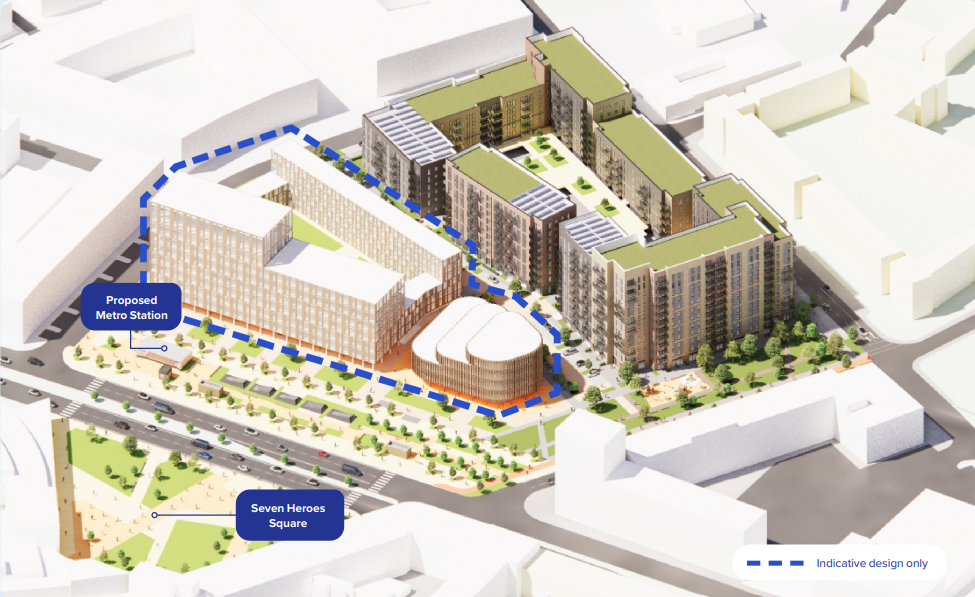
Earlier this week, the Land Development Agency (LDA) went live with its proposal for new apartments with some amenities on a chunk of the long vacant public lands in the heart of Ballymun.
For years, the empty shell of the old shopping centre sat on the lands, a symbol of the broken promises and numerous false starts of regeneration of the area.
Dublin City Council demolished the old shopping centre about six years ago. The lands are carved into two parcels, to develop: sites 1A and 1B.
The LDA has taken on 1B – a rectangle covering 1.89 hectares that backs onto Silloge Road – where it now plans 564 homes, a creche and outdoor space for 100 children, playgrounds, 870sqm of community, arts, and cultural space, and commercial spaces, a brochure says.
The LDA briefed local councillors on the plans Monday morning.
Councillors had been pushing for progress. This week was the first time they've seen real detail of what the LDA has cooking, several councillors said, and they've been looking over the proposal to see if it matches what the area needs and what pain points are likely to come up as residents consider them too.
One of the thorny policy questions over the years has been what mix of homes the council should encourage in Ballymun.
Both Sinn Féin Councillor Leslie Kane and People Before Profit Councillor Conor Reddy said they think social homes should be part of the mix in this development. At the moment, they're all set to be cost-rental.
"There are thousands on the housing and transfer lists in Area D," said Reddy, referring to the social housing waiting lists for that part of the city. (About 2,000, as of July 2024.)
One challenge in Ballymun, though, has been the low spending power which means local businesses have really struggled, said Social Democrats Councillor Mary Callaghan.
"Historically, businesses in the area can't sustain with the level of spending that was in the area. We do need to bring in more people in a higher income bracket," she said, "and income mix is important."
Cost-rental housing is available to households with incomes too high to be eligible for social housing but also, in Dublin, earning no more than €66,000 a year.
That there are no three-bed apartments or larger in the plans is disappointing too, said Kane, the Sinn Féin councillor, also. "So many of our young families need three bedrooms."
The LDA is to run a public consultation on its plans on 15 July at the Axis Ballymun, its website says.
In March 2022, Dublin City Council had put out feelers for developers interested in building out the western side of the shopping-centre lands. But the council wasn't happy with what it got back.
By early July 2024, the council was in early stage negotiations with the LDA about it taking on the site, a council spokesperson said at the time.
The plans released this week are the result of that.
Robert Murphy, a local businessman who has long advocated for housing on the lands to bring in more people with more disposable incomes, said that the city is crying out for housing so he wouldn't expect anybody to be against it.
He hopes that, given the LDA has taken the reins, the project will be delivered fast, he said.
Government policy around what kinds of homes should be built in Ballymun has chopped and changed over the years, evolving from a ban on new social housing and rent supports, to a finer-grain policy of looking at each patch of land.
One of the major features of the scheme that councillors have been considering is that it is planned as solely cost-rental.
That means homes, whereby the rents are set based on the cost of building, financing, managing and maintaining the homes over about 40 years. As an extra safeguard, the rents have to scratch out at at least 25 percent below market rates.
Reddy, the People Before Profit councillor, says he thinks there should be some social, and some affordable purchase, as part of this new LDA scheme in Ballymun. "I think there is already a lot of cost-rental in the pipeline."
Reddy pointed to plans for Coultry Gardens in Ballymun, where Tuath Housing has 222 cost-rental homes planned, alongside 224 social homes.
The pipeline for homes in the North West Area – which includes both Ballymun and Finglas – currently includes 1,974 social homes, 288 cost-rental homes, and 308 affordable-purchase homes at various stages of development, shows a July council report.
Murphy, the local businessman, says all kinds of homes are needed in Ballymun. "We need everything," he said.
The LDA plan is an opportunity for Ballymun, he said, and it could really help the local economy with more disposable income in the community.
When councillors asked for ballpark figures on future rents, officials from the LDA pointed to Niven Oaks in Santry. One-bed apartments in that development are €1,350 a month, and two-beds are €1,585.
That is cheaper than many private rentals in the neighbourhood. A two-bed apartment in The Maieston in the north of Ballymun, is currently listed by Home Club, the letting agent for LRC Group, for €2,400 a month.
But there are so many households on the social housing lists, said Reddy. He would see the all cost-rental scheme as an overcorrection away from social housing, he said.
Kane, the Sinn Féin councillor, said it should definitely not be all cost-rental. "It does not match the needs of people from Ballymun."
Another point of debate is the size of the homes. They breakdown as 91 studios, 190 one-beds, and 283 two-beds, says the LDA presentation.
Reddy hasn't had any explanation as to why there are only studio, one-beds, and two-bed apartments, too, he said – and none bigger for families.
In April last year, the LDA had lobbied the Department of Housing to change apartment standards, arguing that there isn't demand for three-beds and they hurt viability -- even as approved housing bodies reported hundreds applying for three-beds that that they put forward.
Callaghan, of the Social Democrats, said she remembers all the talk years ago of how more one-beds and studios were needed, for those waiting for social homes. "The wait time for single men was dreadful in particular," she said.
But there is a new need that she sees for three bed and four-bed homes, she said.
She is not sure, though, whether the way to meet that is with these new apartments, or by making it easier for those who want to downsize to do that, she said.
 Lois Kapila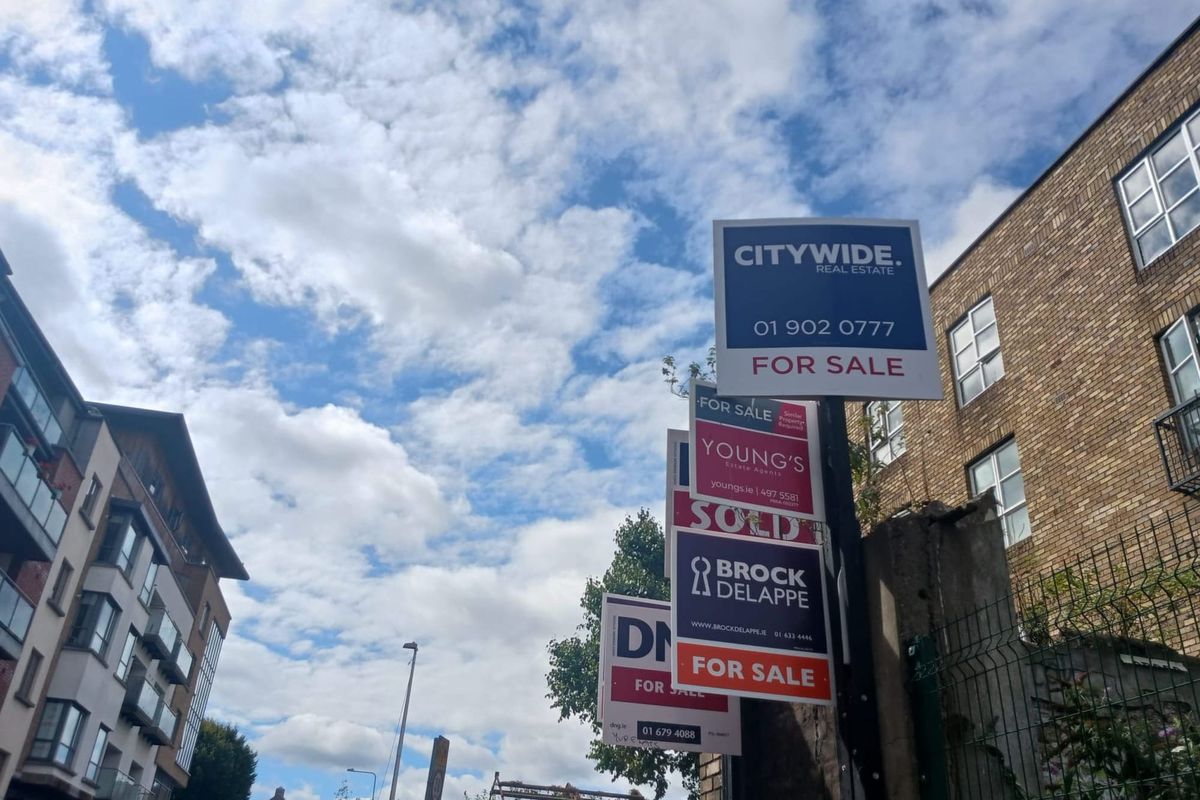
The site being plotted out by the LDA is only part of the vacant lands at the heart of Ballymun. There is also the front bit of the site – Site 1A – which sits on Main Street.
The Ballymun Local Area Plan earmarks that site for 41,000 sqm of shops, offices or apartments at the eastern front where it meets Main Street. It's also where the Metrolink station is due to be put in.
The council doesn't seem to have any timeline though for when that site will be planned and built, said Reddy and Callaghan.
Callaghan said she understands the current thinking is for it to host the Metrolink, some social homes, and maybe shops on the bottom floors too.
But there are so many shops in Ballymun that are vacant and shutdown already, she said. "The challenge is when you don't have the economic support in an area, the places can't survive."
As she sees it, the council still isn't doing enough to tempt businesses to open in the vacant commercial spaces that it does have, by slashing rents and making deals.
They may do it for some, she said. But "if they were doing it right, they wouldn't have those vacant units."
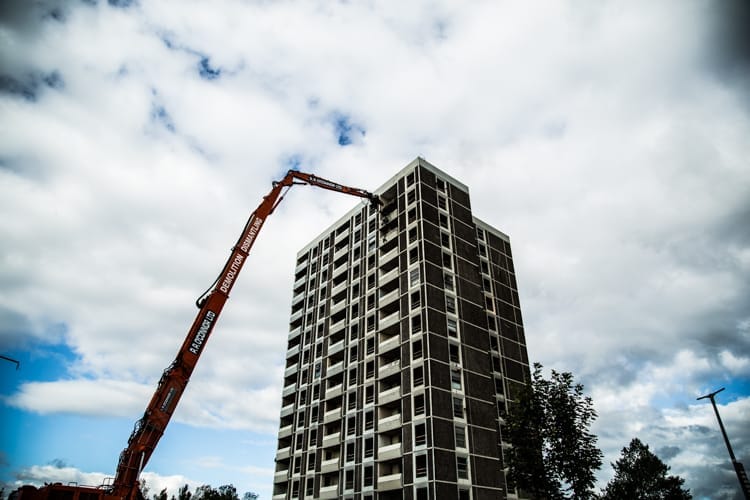
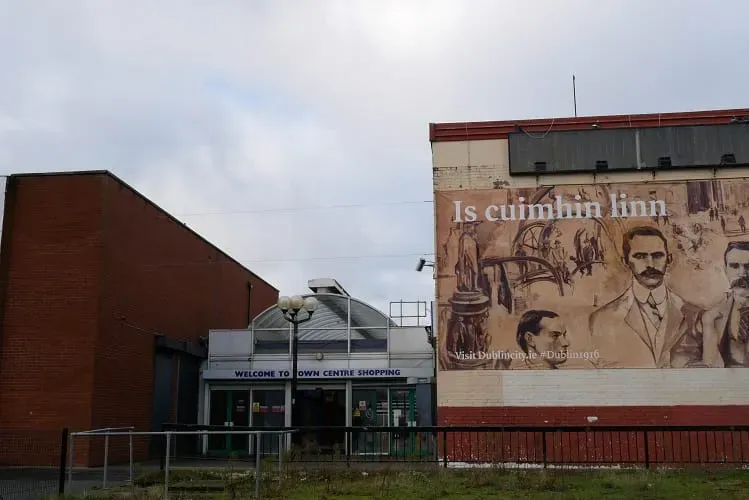
File photo of the last Ballymun towers being demolished in 2015 (L). Photo by Caroline Brady; File photo of old Ballymun shopping centre (R). Photo by Lois Kapila.
Reddy wants to see some shops as part of the LDA lands though, he said. Because it is unclear when the Site 1A lands will even be built out, he said.
Meanwhile, Callaghan says she predicts another pain point for the LDA's blocks on site 1B may be the bulk of the scheme.
The city needs more housing but the towers of up to 12 storeys really do go tall on the site, she said, and people have gotten used to walking dogs on that green space, and staring at the mountains in the distant.
Architect and housing commentator Mel Reynold has said that the LDA has leant into lower standard and smaller, high-rise, apartments as it tries to make its numbers stack up for viable cost-rental.
But building high-rise is always going to be expensive, he said. Government should accept that, and move to building high-density housing, at low- to medium-rise, he says.
"It's a difficult one because we need housing but we need to do that mindfully," said Callaghan, the councillor.
Indeed, he isn't opposed to high-rise but he is already getting that feedback, said Reddy. "That we knocked flats to put more flats is going to be hard to swallow."

The owner of Grand Canal Harbour shouldn't have installed the barriers, the council had said. But it decided they could have them for three years.

With their eyes on three sites, Fingal County Councillors agreed to write to the Minister for Housing to ask him to change the rules.

It is in the process of procuring "preliminary property development advice" for City Block 19, said John Tolan, its marketing and development controller.

On Monday, the National Transport Authority published a tender looking for someone to help it plan and oversee the roll-out of red-light and speed cameras.