

Is a bad definition of derelict partly behind the bad dereliction in Dublin?
The Department of Finance, with Revenue and the Department of Housing, is looking at a new definition, said a spokesperson.
The Department of Finance, with Revenue and the Department of Housing, is looking at a new definition, said a spokesperson.

Who, or what, is to blame for the continued crumbling of the two red-brick terraced homes at 19 and 21 Connaught Street in Phibsboro depends on who you ask.
Dublin City Council – its current owner – should never have bought them in the first place given the state of the buildings, said Robert Buckle, a senior council engineer, on Tuesday.
They’re too rundown and too expensive to do up, said Buckle, at a meeting of the Central Area Committee. Builders have quoted around €1.7 million for both, he said.
No, it absolutely should have, said resident Paul McCarthy, later on the phone. It should just have done it sooner, he said, before they were in such a bad way.
That it hadn’t though, potentially highlights a short-coming that could also impact the council’s capacity to turn around dereliction in the city in the coming years, even as it looks to set up a “special purpose vehicle” – a new council-owned company – to focus on the job.
The definition of dereliction in law is too heavily focused on what a building looks like from the outside, say some councillors and campaigning residents.
The two homes on Connaught Street were put on the city’s Derelict Sites Register – an early step towards a compulsory purchase order (CPO) – in 2009.
But the then-owner fixed up how it looked on the outside, so the council removed it from the register in 2012. It didn’t go back on the register until 2018.
“The current focus on visible dereliction means action often comes too late, when buildings have already deteriorated badly,” said McCarthy.
“Long-term disuse should be recognised as an early warning sign,” he said.
At a meeting of the council’s planning committee on Wednesday, Darach O'Connor, a council executive manager, said in passing that the council is constrained by the definition in law of what is derelict.
It is specific. A site is considered derelict if it “detracts, or is likely to detract, to a material degree from the amenity, character or appearance of land in the neighbourhood”.
If the home appears “ruinous”, “dangerous”, or “unsightly”, then the council can put it on the register.
But if the owner does some work so that it no longer appears derelict from the outside, then the council takes it off the register again – as it did on Connaught Street.
“It is very superficial,” says Lorcan Sirr, a housing lecturer at TU Dublin, of the definition of dereliction.
Properties can appear maintained from the front, with the facade intact, but be falling down at the back, he says. Legislation should be clarified to ensure that the overall state of the property is taken into account, he said.
The Department of Finance is working on a new Derelict Property Tax, which will be implemented by Revenue, he says. “The challenge there is to find a suitable definition of dereliction,” says Sirr.
A spokesperson for the Department of Finance said that it is working with Revenue and the Department of Housing “to develop a definition of dereliction under which properties will be considered liable for the new Derelict Property Tax.”
A Green Party private members' bill attempts to extend the definition of dereliction to include all properties that are permanently boarded and not habitable, those that are not adequately maintained and those that have been disconnected from utilities for two years or more.
Green Party Councillor Janet Horner says that there needs to be robust debate around the definition of dereliction ahead of the proposed new tax.
“Even if you are using a back room for storage,” she says, “you shouldn’t be allowed to leave the building to crumble.”
McCarthy, the Phibsboro resident, says legislation should balance the rights of residents and communities with private owners' rights.
“If intervention were possible earlier, many buildings could be brought back into use at far lower cost and with less disruption on communities,” he said.
At the Central Area Committee meeting, Buckle said that the council has restored around 100 homes under the Buy and Renew Scheme, for long-term vacant and derelict properties.
But he also listed other derelict homes that the council has bought that are in a prohibitively bad way.
That includes two homes at 8 and 10 Ferguson Road in Drumcondra, he said. “The two properties are structurally unsound, and there is no foundation within those properties.”
They should probably be demolished and rebuilt, he said. But “the costs for this are astronomically high”.
Buckle said the council faces a similar bind in Harold’s Cross. (This probably refers to 144 Harold’s Cross Road, which the council bought in 2018 and demolished, according to a council spokesperson in October.)
McCarthy, the resident in Phibsoro, said there is also another long-term vacant home on Connaught Street that he and neighbours have been watching.
They fear that it will slide into dereliction eventually too, he said. “From our perspective, it feels like a case of waiting for visible decay rather than preventing it.”
Flick between Dublin City Council committees and it can be hard to follow exactly what the council and council officials are planning, in their push to tackle dereliction.
“It's a civic crime to let properties sit there,” said O'Connor, a council executive manager, at the meeting of the planning committee on Wednesday.
“In the last couple of months, we have adopted a zero-tolerance approach on dereliction,” he said.
But also, the council has paused any CPOs of derelict homes – as raised at the Central Area Committee.
 Laoise Neylon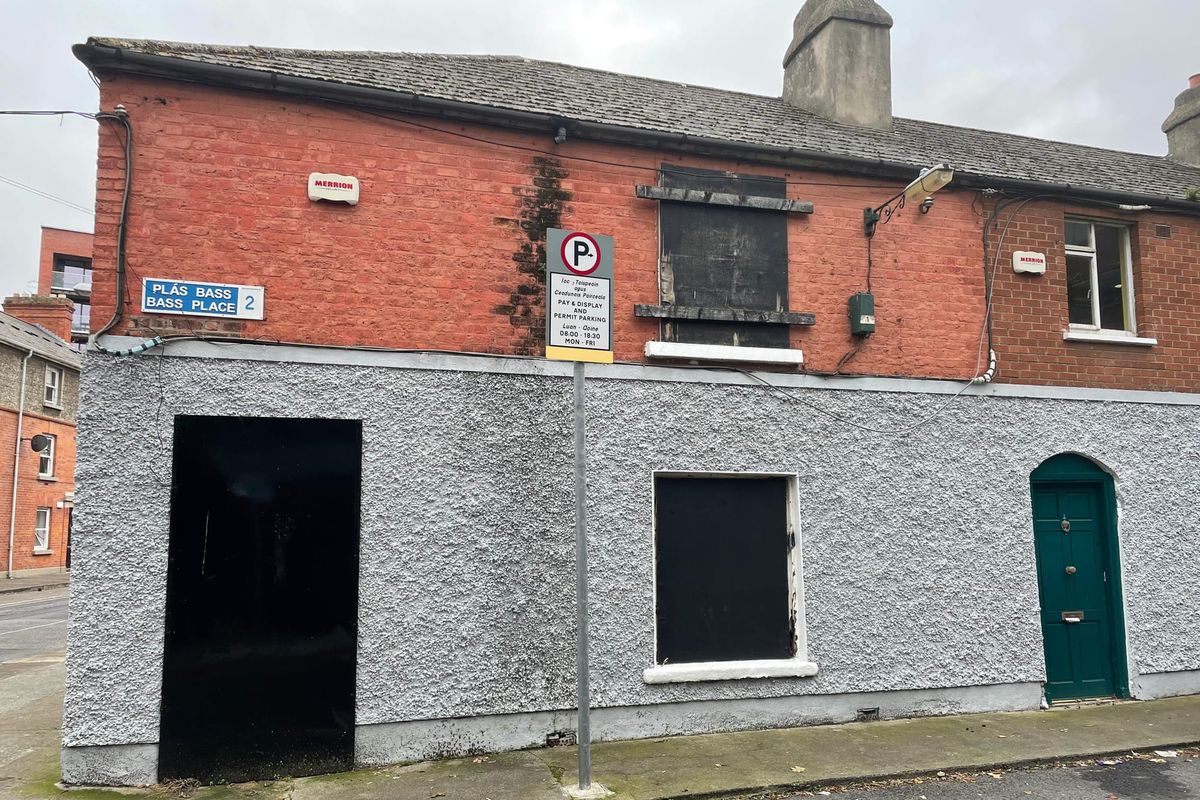
That pause was not agreed by councillors, said independent Councillor Cieran Perry at that meeting on Tuesday.
“I’ve spent years trying to convince the council to progress CPOs as a way to tackle dereliction,” he said. Despite many plans to tackle dereliction, they seem in reality to have stalled, he said.
But changes are underway, said O’Connor at the planning committee meeting. “We are ramping up in terms of our inspections, our engagement and tracking down owners,” he said.
The council plans to make it possible for locals to report derelict properties in their areas online, he said, and so councillors can see which homes the council is investigating.
The council is also, of course, planning to roll out a special purpose vehicle (SPV), a kind of public developer for the city centre, with an unclear overall remit but that is to tackle vacancy and dereliction, starting with two pilot streets in the north inner-city.
The difference between the current council system, and the SPV drive, is that the SPV will be funded, staffed and resourced, said Social Democrats Councillor Cian Farrell.
It has €18 million for the two pilot streets, he says, and is seeking an additional €118 million.
The SPV is to have a staff of 12 or 13 people, separate from 10 additional staff being hired by the council in the dereliction unit, says Farrell.
Some derelict-property owners need help to bring the buildings back into use, he says. “They mightn’t have the capital, they mightn’t have the time, or the expertise.”
Council staff can advise them, particularly on the complexity of doing up protected structures, says Farrell.
Lois Kapila
Going forward, the council will use a carrot and stick approach, he said. “We’re here to help, but if you refuse to engage with us or refuse the help we are going to come down on you like a ton of bricks and this is no longer acceptable.”
In those cases, the council will pursue CPOs vigorously, and also bring any other relevant enforcement action that it can, he said.
Of course, as it stands, any building would have to meet the arguably tight definition of derelict in the current law to be put on the register, and CPO-ed, or the council would have to try to stretch out that definition more than it has in the past.
Farrell says he hopes that going forward, the council will deal differently with derelict buildings which it CPOs, but rules too expensive to do up.
He hopes that councillors will agree to sell derelict sites with conditions attached that they be renovated, rather than leave them sitting.
In the past, the council has stood back from enforcing such conditions.
Councillors have agreed a policy by which, before selling any derelict homes, the council must explore if they are suitable for social housing or cost-rental, and offer first dibs on buying them to housing charities.
If none of those options suit, it can then offer them for sale to private buyers.
The council is going to start trying to sell derelict properties on the open market, said Margaret Mooney, the council official who gave the presentation on dereliction at the Central Area Committee.
It will soon list some derelict homes it owns in Chapelizod, she said, and if that works out, it will move on to sell some of the others. The council has owned seven houses at Mulberry Cottages, in Chapelizod since 2022.
“It may be easier to move some of these properties rather than redevelop them,” she said.

Nine of those are in unregistered facilities.

As the rent increase kicks in, councillors were briefed at recent meetings on plans for some maintenance in flats across Dublin city. Some asked who’s doing the works.

It has been working, for more than a decade, on plans for more permanent flood defences. But those aren’t built yet.

Members of Santry Forum say they want a plan for the area that includes “social infrastructure” too. And they've worked up their own proposal.