

Skeletal remains found during construction at Victorian Fruit and Vegetable Market
The bones are thought to come from the major medieval monastery at St Mary’s Abbey, and further excavation works are ongoing.
Work on two bus corridors – Liffey Valley to the city centre, and Ballymun and Finglas to the city centre – is due to kick off this year. And that’s just the start.

After years of talk, consultation, planning, design and debate, construction of a slew of big transport infrastructure projects for Dublin city is beginning.
That’s what Grainne Mackin, the National Transport Authority’s (NTA’s) director of communications, told Dublin City Council’s transport committee on Wednesday.
Work on a core bus corridor – bus lanes, cycle lanes, footpaths, and more – from Liffey Valley to the city centre, and another from Ballymun and Finglas to the city centre, is due to start this year, Mackin said.
Work on a third bus corridor, from Clongriffin to the city centre, is due to start next year, she said. And there’ll be major work on the MetroLink project from Swords to the city centre in 2027, said Paul Daniel, from MetroLink.
And there’s more in the pipeline behind those projects.
Enabling works have started on the Dart+ West project, said Jane Cregan, deputy communications manager at Iarnród Éireann. That one’s designed to double the frequency of trains from Maynooth into the city centre, and electrify the route.
The council, the NTA, Iarnród Éireann, MetroLink and other agencies involved are coordinating to minimise disruption, but there’s only so much they can do, their representatives told the committee.
“There is going to be inconvenience, there is going to be disruption, there is going to be diversions, absolutely, there’s no shying away from that – this is some of the biggest infrastructure this city will see, and has seen for a long time,” Mackin said.
“Over the next decade to 15 years we will see that Dublin will be transformed with all these different versions of sustainable transport,” she said.
Jason Cullen, of the Dublin Commuter Coalition, who is not a councillor but is a member of the council’s transport committee, asked about funding, and judicial reviews.
Yes, seven of the core bus corridors that are part of the Dublin Bus rejig of the city’s bus networks are under judicial review, Mackin told the members of what is officially called the Mobility and Public Realm Strategic Policy Committee.
But “we have five core bus corridor schemes which are clear, as such, and clean,” Mackin said. “We have two commencing construction … we are actually starting construction now.”
With so many more trucks coming to the city’s streets, to haul materials to and from the construction sites, what are the agencies going to do to keep Dubliners who cycle, walk, or wheel safe? several committee members asked.
They’ve been planning for that, Mackin and Daniel said.
“There’s been a lot of talk about congestion in the city and we certainly see more and more people in the city experiencing longer and longer journeys into the city,” said the council’s head of traffic, Brendan O’Brien.
Mackin, from the NTA, said that “Much of the existing transport infrastructure is not designed for our current need let alone our future need.”
So it’s about time the national transport agencies got moving on all these projects to upgrade the city’s public transport infrastructure, said O’Brien.
“From the city’s perspective this should have been delivered yesterday, to be quite frank with you,” he said.
“We’ve already lost a decade of underinvestment in public transport in the city,” O’Brien said. “But at least we’re having them now.”
Dublin’s population is growing and projections show it continuing to grow steadily over the next 40 years, said Mackin. Meanwhile, the government aims to cut emissions, in an effort to help blunt the impacts of climate change.
Already “75 percent of commuters now enter the city without a private car”, Mackin said. But there’s a need for people to have more sustainable transport options: buses, Darts, Luases, cycle lanes, walking routes.
“The Luas Cross City I worked on as head of comms was the last major project we would have had in Dublin city centre,” she said, referring to the extension of the Green Line from St Stephen’s Green across the Liffey and north to Broombridge, from 2013 to 2017.
But now, “after a number of years of being in planning, design, public consultations, we now have an abundance of infrastructure projects, almost an embarrassment of them”, Mackin said.
Cullen, of the Dublin Commuter Coalition, questioned her optimism. “Judicial reviews and funding issues affect a number of things you brought up in the plan, I just wanted to know how realistic are the timelines you have in there?” he asked.
Some of the planned 12 core bus corridors that are part of the Bus Connects network redesign are under judicial review at the moment, Mackin said, but there’s plenty to be getting on with in the meantime.
In addition to the judicial reviews, some other projects are being held up by a lack of funding.
For example, the government hasn’t funded the Dart+ South West project, to electrify and increase the frequency of trains between the city and Celbridge.
In December, several councillors on the South Central Area Committee voiced their frustration that this project wasn’t being built yet, to serve thousands of new homes planned for the areas it is designed to serve.
Putting in public transport like the Dart+ South West line, would help reduce traffic on the roads, said Green Party Councillor Michael Pidgeon.
“Public transport moves real numbers,” Pidgeon said. “If we keep taking money away from these projects and delaying them, we’re just going to condemn people to slowly losing the will to live in gridlock.”
 Sam Tranum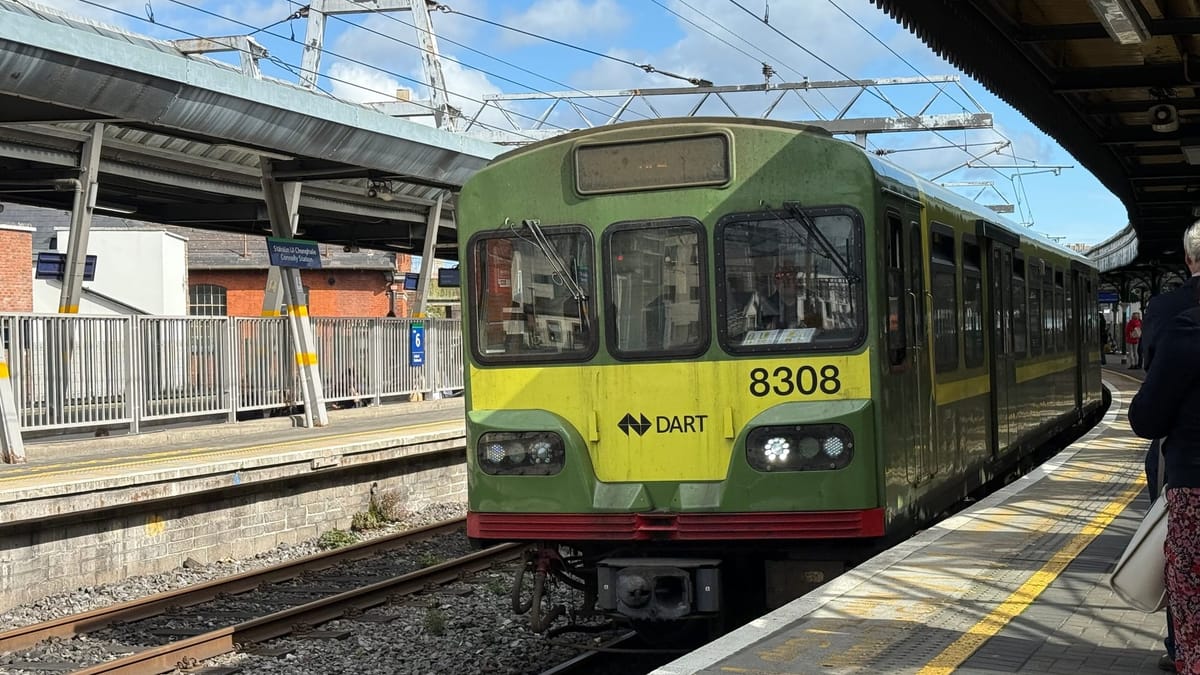
As construction begins on the big transport infrastructure projects that are moving forward, it’s important that the trucks hauling stuff to and from the sites are top of the line, said Cullen, at Wednesday’s meeting.
He pointed to a figure from that day’s presentation by MetroLink head of PR Eoin Murphy, that the project – as it stretches from Charlemont to Swords – would involve 1,561,142 “two-way movements” over the course of the project.
“Can we please make sure within the procurement that those trucks are modern, clean, and have the big visuals in the cabs and all that kind of stuff?” Cullen asked.
All the “construction movements” will “create conflict between construction vehicles and active travel users, we know this, it shouldn’t be a surprise”, said Karl Stanley, a Social Democrats councillor.
“We don’t want cyclists hit by a truck turning left because we didn’t want to pay extra for trucks with highly visible cabs,” Stanley said.
 Sam Tranum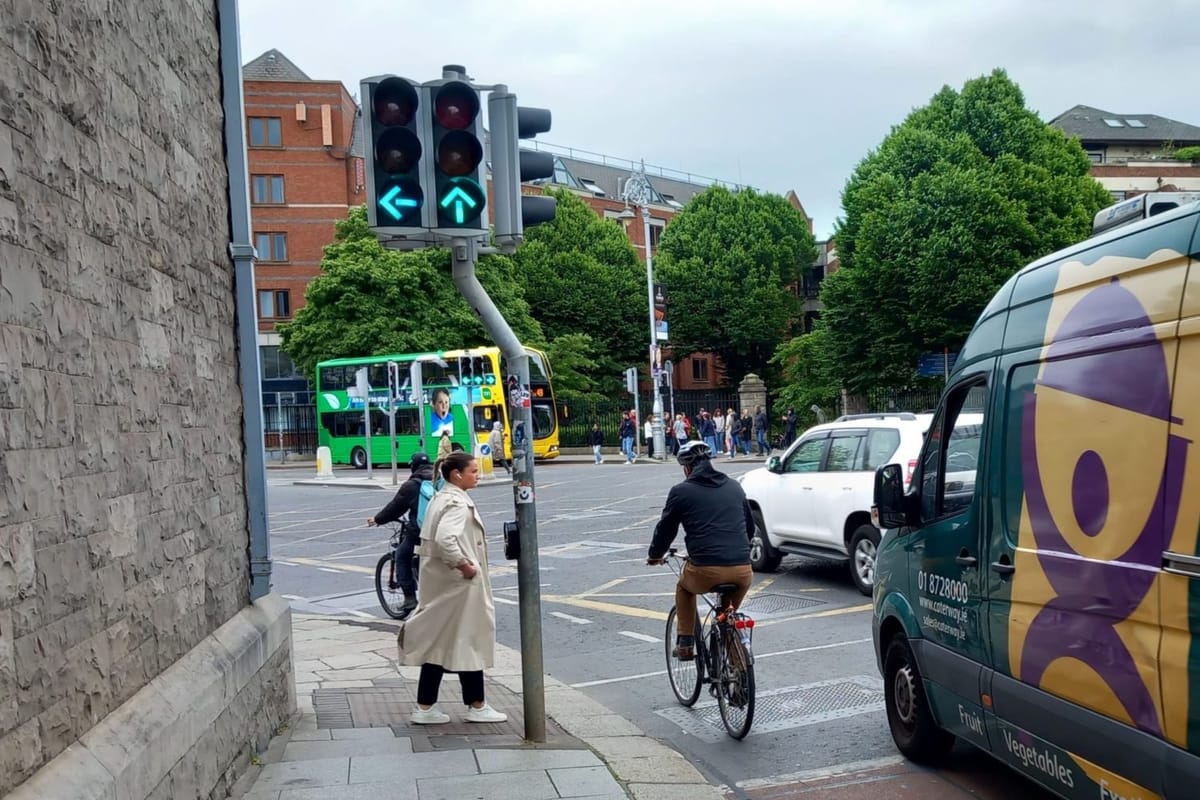
With so much disruption for drivers in the city coming, “this is exactly the time when you want people to make their journeys with modes that are alternatives to private vehicles”, said Siobhán McNamara, of the Dublin Cycling Campaign, another member of the committee.
So project managers should take extra care to make it safe for people who are walking, or cycling, or whatever, McNamara said.
There should be “full provision made for them at the junctions so that they can confidently navigate the space that they’re not the afterthought, which often is the case – often you come to a junction there’s a cyclists dismount”.
The NTA is on top of that, Mackin said. “All traffic management measures must adopt a safety-led approach, especially including vulnerable users,” she said. “So that’s all stitched in.”
MetroLink, too, is working on these issues, said Daniel. It’s focused on “moving our whole construction industry and the haulage industry into a place which will be best in class”.
“So by the major work stages of 2027 when the bulk, when the vast majority of this haulage is going to happen”, they plan to have a modern, efficient fleet of vehicles in place, he said.
They are also planning a “just in time” delivery management system, so that trucks won’t be parked up, or idling, or circling in the city, Daniel said. The goal is that they’d just arrive when they’re needed, do their pick up or drop-off, and move out, he said.
The Liffey Valley to city centre Bus Connects corridor is going to get started before MetroLink now though. A slide in Mackin’s presentation at Wednesday’s meeting shows the plans for the next six months of that project.
Construction’s due to start in March, on a segment stretching from Liffey Valley to Ballyfermot, moving in phases to reach Inchicore by the end of the year.
Crews will be putting in measures to let the buses run smooth and fast without getting caught in traffic, adding cycle lanes, upgrading junctions, sprinkling in new bus stops, and more.
“We’re going to work in sections so that there isn’t going to be a complete shut down of the scheme from end to end,” said Mackin.
“We need to keep the city moving,” she said. “The city needs to do business, people need to get deliveries, they need to get loading, they need to get to school, to work and to visits.”

The bones are thought to come from the major medieval monastery at St Mary’s Abbey, and further excavation works are ongoing.

There is a bill moving through the Oireachtas to loosen which rank of Garda can apply to the courts for “anti-social behaviour orders” – also known as ASBOs.

“I think it's so sad that a beautiful little house was destroyed,” says Rosita Sweetman. “It seems we are incredibly bad at managing our housing stock.”

They haven’t involved The Complex themselves in these discussions.