

Tusla says it's an offence to run an unregistered children’s home, but it places children in them anyways
So how does it square the circle?
Richard Shakespeare recently held a closed-doors briefing for councillors, giving them a presentation that was watermarked so they could be caught if they shared it.

At a meeting at Mansion House in February, Dublin City Council CEO Richard Shakespeare explained to Dublin city councillors his plan to build the council a new HQ.
It involves buying the stalled Camden Yard development on Kevin Street, where DIT used to be – Shakespeare says the council has signed a contract to do that.
And then building new council offices, extra offices to lease to someone else, and “up to 300 public homes”, on the site.
It also involves demolishing the council’s Civic Offices on Wood Quay, and redeveloping that site with social and cost-rental housing.
The costs of the two sides of this project combined would easily top €600 million in public money. But council executives have given few details, publicly, to make the case for it.
At a meeting of the South East Area Committee in January, in response to a request from Labour Councillor Dermot Lacey, council executives provided a report on the project that extended to about two-thirds of a page, giving broad strokes.
At that month’s meeting of the full council, when Sinn Féin Councillor Micheál Mac Donncha tried to ask about the project, Lord Mayor Ray McAdam, a Fine Gael councillor, gave him 10 seconds – and no answers.
Both the executive’s report, and the Lord Mayor said there was already a plan in place for the executive to give group leaders – representatives of the parties and independent groups on the council – a briefing shortly after, and all councillors one in February.
 Sam Tranum
Unlike those two meetings, which were conducted in public, though, the briefing at Mansion House in February was held behind closed doors.
Councillors who went along were given hard copies of a presentation, and told not to share them around. The documents were watermarked with the councillors’ names, so if they did share them, it’d be easier to catch.
In response to a query on why the council executive is going to such lengths to keep details of the project from the public, a council spokesperson said on Thursday that it was following its "statutory governance processes".
"Certain commercially sensitive material is shared first with Members [councillors] in line with those procedures, before wider publication," the spokesperson said. "Further documentation will be made available as the project progresses through design, planning and member engagement."
However, when Green Party Councillor Donna Cooney went to the Civic Offices by appointment on Wednesday to see one of the technical reports underpinning the executive’s argument that it makes financial sense to build new offices rather than retrofit old ones, she wasn’t allowed, she says.
April is getting closer, at which point councillors will be asked to approve the loan for the council to buy Camden Yard, says Cooney. “And part of the financial argument is that it is too expensive to retrofit [Civic Offices].”
“I don’t feel comfortable about doing that blindly and trustingly,” she said. “I don’t even understand why it needs to be a secret report. It makes me more suspicious.”
But Labour Party Councillor Darragh Moriarty said he understands why Shakespeare and other council officials needed to be careful while the deal for Camden Yard was still in the works. It was commercially sensitive, he says.
Still, officials have answered any detailed questions put by councillors at briefings, Moriarty says, and been ready to answer phone calls.
However, “now that the sale has gone through, there’s a different level of scrutiny that needs to be applied”, Moriarty said.
“Now, it’s entirely right that councillors in the full glare at public meetings scrutinise this, and demand timelines and detailed plans,” he said.
In an email to councillors on Wednesday, Shakespeare, the council chief executive, said that the council has now “signed a contract to purchase the Camden Yard site on Kevin Street”.
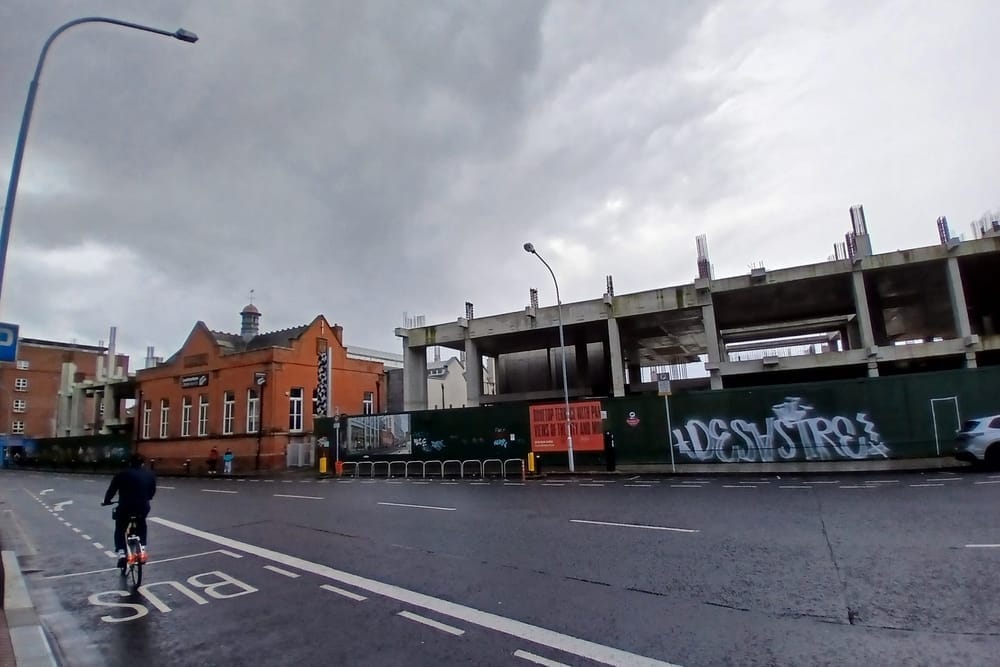
“The acquisition enables us to progress plans for the development of a new Civic Offices at Camden Yard, designed to modern, energy-efficient standards, alongside the delivery of up to 300 public homes on the site,” he said.
This would also “unlock the potential for in excess of 500 public homes on the Wood Quay lands. This approach supports both our climate objectives and the city’s significant housing needs,” he said.
The presentation given to councillors at Mansion House last month said the purchase price was €90 million.
That's attractive, said Fianna Fáil Councillor Keith Connolly. "We’re getting a very valuable site for very low money," he said, and most councillors were positive about it all at the briefings.
The other interesting part is being able to provide housing, he said. “That’s the attractive part as well.”
Indeed, if the council were purely a commercial operation, the price tag for Camden Yard would immediately be a good deal, said Social Democrats Councillor Karl Stanley.
But it is also important for the council to be taking a wider view of it, he said, as the steward for the city. Including serious consideration of the climate and carbon costs of the entire two-site project, he said.
There’s a looming government target for all public buildings to achieve a minimum BER rating of B by 2030. In 2019, the Civic Offices' BER was D1, though it's unclear whether that has since changed.
At the meeting at Mansion House in February, Green Party councillors asked for details of the executive’s case that it would be too costly to renovate the current Civic Offices on Wood Quay to meet that target – rather than building a new HQ on Kevin Street.
It's generally more environmentally friendly to renovate existing buildings than to abandon them to the wrecking ball.
In December, The Currency reported on a Wednesday that the cost of refurbishment would be "over €250 million". By that Friday, in the email on Shakespeare's behalf, that cost had risen to "€350–€400 million".
The presentation to councillors at Mansion House in February put the cost at €487 million if done in one phase, or €504 million if done in multiple phases.
Moriarty, the Labour councillor, says officials say a significant portion of the retrofitting cost would be renting somewhere else for council staff to run the city from, while works were underway at Wood Quay.
“They did get into detail on some of that in the briefings,” he said.
Officials also said that it wouldn’t work to retrofit the glassy buildings along the quays which are part of the Civic Offices, Moriarty said. But architects could maybe relook at some of the others, he said.
Dublin City Council has refused to release three recent reports – including one by consultancy Arup – examining the energy performance of the Civic Offices, or examining the cost of refurbishing the four blocks of offices.
The council knocked back a request under the Freedom of Information Act, saying that the reports are commercially sensitive and that releasing them could affect the council’s internal deliberative processes, among other reasons.
 Laoise Neylon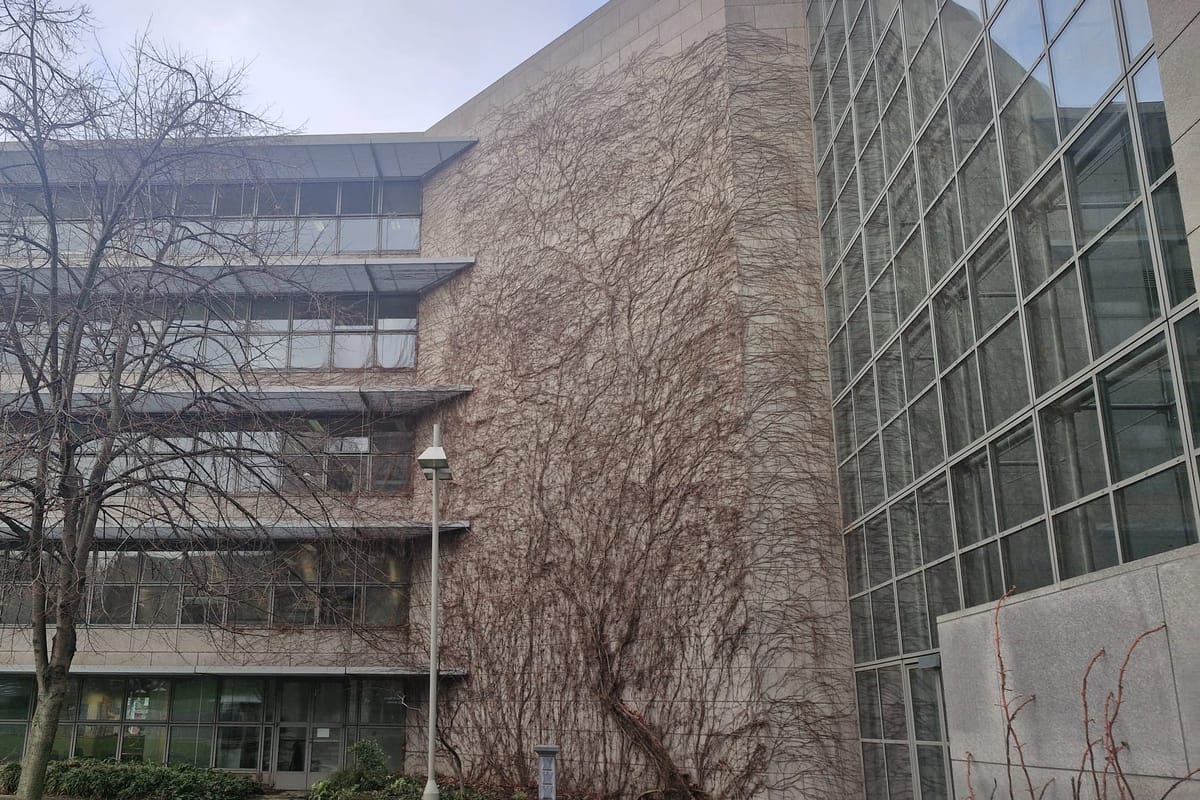
However, councillors were told they could make an appointment to stop into Civic Offices on Wood Quay, to read one of the reports, said Cooney, the Green Party councillor.
This was one drawn up by engineers at Arup, looking into costs and considerations around retrofitting the current headquarters, Cooney said.
She said she wants to take a look because she wants to see more of the detail around the possibilities of a phased retrofitting of the office space as offices.
She wants to see also what standard they considered bringing them up to, she says. “The main thing would be to make them a place that is comfortable for the employees to work in.”
But once she got to the Civic Offices on Wednesday, a staff member from the chief executive’s office said that she couldn’t see it right then after all, she says. “They wouldn’t let me see it.”
The staff member said Cooney would need to have somebody with her to explain it. Cooney said she would read it, and ask questions later if she had any.
Later, on the phone, the staff member said council officials were going to arrange for interested councillors to attend a meeting next week, where somebody would explain that report.
Cooney didn’t get a clear answer, she said, on whether they would get the full report at that meeting or just a summary. And if she could read the whole report ahead of the meeting, to think about questions she wants to ask, she said.
Her party colleague, Feljin Jose, said that building a new Civic Offices to avoid retrofitting the existing Civic Offices defeats the purpose of the relevant EU directive, which demands public bodies renovate old offices to reduce carbon emissions.
"We'd only be fulfilling the regulations on paper while increasing overall emissions," he said.
But now that the council has signed a contract to buy Camden Yard, the next step is to set about building out the planning permission for the site.
The presentation Shakespeare gave to councillors at Mansion House last month estimates it would cost €338 million to build the new council offices, €102 million for the additional offices they plan to let out, and €141 million to build the housing.
Shakespeare said in January that the council plans to buy and develop the Camden Yard site using capital spending, and borrowing.
He said no other projects would be affected, with money being shifted away from them to pay for this, but it is unclear how this is possible, since the council has a limited capital budget for big once-off projects like this.
Independent Councillor Mannix Flynn, a supporter of the project, has said the council could sell off some of its assets – like land or car park – to raise more money if necessary.
The council’s plan to buy and build out Camden Yard hinges on councillors approving a big loan – and the Department of Housing signing off on that too.
But the council’s borrowing capacity is limited by an annual cap on total borrowing by all local authorities combined.
The department limits how much councils can borrow each year. At the moment, they can collectively borrow €118 million a year.
Council budgets show it borrowing €370 million itself on other projects between 2025 and 2029, including €135 million for a big public housing development at Emmet Road, and €90 million for the new city library on Parnell Square.
The department has said it is looking at lifting the borrowing envelope. Letting councils borrow more, in other words. But, it has said, exploration of that is at early stages.
Moriarty, the Labour councillor, said that the existing borrowing envelope has become totally unsustainable. “It doesn’t allow for any ambition.”
The borrowing cap has been a consistent bugbear for the council, repeatedly raised, he said.
 Lois Kapila
If the project proceeds and the council moves to its new HQ at Camden Yards, some years down the line, then that would leave its current offices on Wood Quay vacant.
Those offices include two “bunkers” designed by architect Sam Stephenson, as well as the glass-fronted office building along the river was built, completed in 1994.

The National Inventory of Architectural Heritage lists these as “regional” architectural significance. This “constitutes a ministerial recommendation for its inclusion on Dublin City Council’s Record of Protected Structures”, says the 2020 conservation report. Although it’s not listed (yet).
When construction started on those buildings, it revealed on the site “the core of the Viking and medieval site known as Dyflinn”, according to an archaeological report from the 2020 planning application.
These finds kicked off massive protests to preserve the remains. For the September 1978 “Save Wood Quay” protest march, about 20,000 people took to the streets, according to History Ireland. There was also a three-week sit-in on the site by 52 protestors, “supported by thousands of members of the public”, it says.
In the end, of course, the Civic Offices were built. These days, it’s the headquarters for the council, with about 20,000 square metres of office space.
 Sam Tranum
The plan for the Civic Offices, according to the watermarked presentation given to councillors at Mansion House in February, is to demolish all the buildings.
In their place, the presentation shows, in a “design concept/capacity study”, blocks of apartments covering most of the site, with several courtyards and green spaces around and among them.
A block to the south of the site would be social housing, it says. Three blocks to the north of the site would be cost-rental.
“Design Option 05”, shows 401 cost-rental apartments, and 131 social apartments, for a total of 532 homes, and 1,229 bedrooms.
“The LDA standard unit types were used for this study,” the notes on one page say.
A spokesperson for the Land Development Agency has previously declined to comment on whether it would be interested in building housing on the Wood Quay site.
There is also a “standalone cultural amenity and community centre”, in the designs given to councilors at the Mansion House briefing.
On one page of the presentation, there’s a drawing of the site, the positions and shapes of the blocks, in grey, and the courtyards. An amenity building is marked in yellow on the Fishamble Street side of the site.
Notes to the side of this drawing say “A two-storey amenity building is introduced as focal point and gateway element”. On the drawing itself, however, it’s marked “6 storey Amenity building”, “Community / Arts / Cultural Centre”.
The plans in the presentation are marked “City Architects”. There’s a note in them saying it is a “high level analysis of the capacity of the site”.
It was compiled “without inputs from design team consultants such as Civil & Structural Engineers, Services Engineers, Fire Safety Engineers, Access Consultants or Landscape Consultants”, the presentation says.
It was also “prepared in the absence of detailed site information such as topographic surveys, utility surveys and site investigation surveys”, and “no consultation has taken place with DCC’s Planning Department or Technical Departments in relation to the proposal presented”.
On Thursday, a spokesperson for the council said that now that it has signed a contract for Camden Yard, it's going to start talking more to councillors about the future of Wood Quay.
"A structured process will now take place with Elected Members to consider future options for Wood Quay," the spokesperson said. "No decisions have been made, and considerations around the existing buildings – including heritage, sustainability and architectural factors – will form part of that engagement."
Asked in December whether the council’s plans to move its HQ away from Wood Quay, to Camden Yards, would require permission from the Department of Housing, a department spokesperson said no.
“Ministerial approval is not required in respect of the location or purchase of local authority offices and buildings – the Department does not have direct involvement or role in such matters,” the spokesperson said.
But the presentation Shakespeare gave to councillors at Mansion House last month, said the project would need to be approved by the central government.
Because “it will be considered a Major Project (Over €200million)”, it says. “Ministerial approval prior to tendering.”
In response to a query on whether it agrees with this assessment that the project will require government approval, a spokesperson for the Department of Housing said on Thursday that it's unclear at this point.
"Given the breadth and complexity of the overall project", the spokesperson said, "it is not possible to confirm at this point whether Central Government approval under the major projects guidelines will be required, or if it will apply to all elements of the project."
"When the Dublin City Council project proposal is further developed, this Department will engage with the local authority both in respect of the wider proposal and the housing elements," he said.
In any case, Moriarty, the Labour councillor, said that as far as he knows, council officials have spoken to the central government about its plans for Camden Yard and Wood Quay. “My understanding is nobody has shouted stop.”
In his email to councillors announcing that the council had signed a contract to buy Camden Yard, Shakespeare, the council’s chief executive, said, “Work will now begin on the detailed design, planning, and sequencing required to advance this project.”
Moriarty said he’s been told it could take between now and Q1 of 2027 for contractors to be back on site at Camden Yard. “Because everything was stood down,” he said.
The presentation given to councillors last month lists the planned "completion" date for the Camden Yard end of the project as 2029.
While that construction is going on, the council would get its ducks in a row for the redevelopment of the Wood Quay site, he says.
So that once Camden Yard is launched, workers from the Civic Offices could move over and work get started at Wood Quay.
That would mean only a short gap between workers leaving Wood Quay, and work starting on that site, he said. “This is what I would hope would happen.”
Stanley, the Social Democrats councillor, says that his party's main concern is that the Wood Quay site won't move that fast, that the economy turns and funding fails to materialise, and that it sits for decades empty and falling derelict.
If this is pursued, he says, the council should look to put forward a detailed positive vision for what will go on that site as soon as possible.

So how does it square the circle?

But while the numbers of foxes in cities has been steadily creeping upwards, is it a problem or, if humans respond right, a boon?

Council officials want to keep renting it for about the next five years to the wastewater plant operators.

After a while, they can’t work and can’t travel abroad and return.