

Concerns about continuity of care as Tusla changes 3,000 children’s social workers
“If you read any research with care-experienced voices – every piece of research talks about the importance of continuity of care.”
It’ll take some cash but the aim is, little by little, to carve out a different local economy.

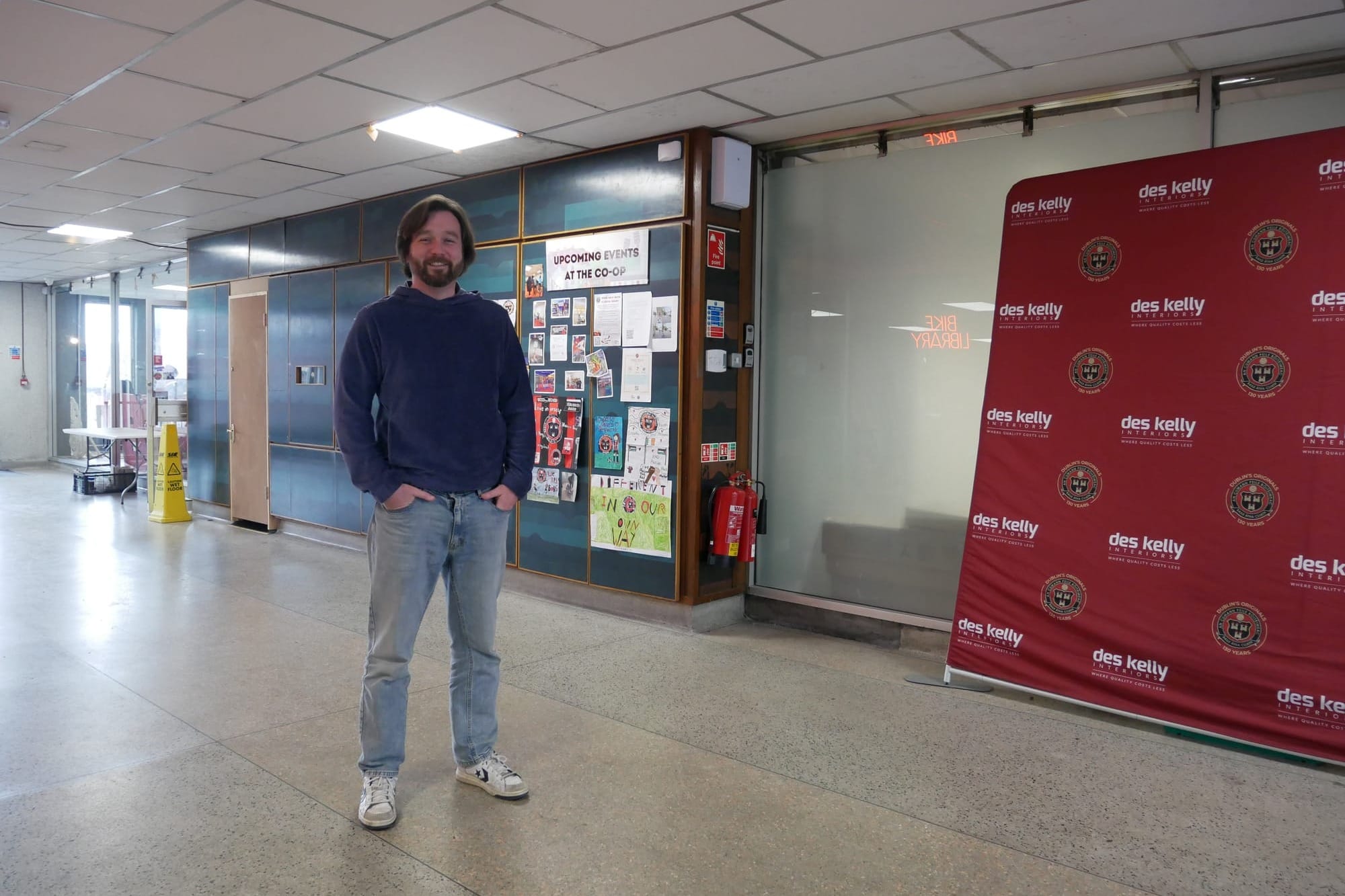
Seán McCabe has a plan for some of the visitors who have rolled into town this week to help launch the Bohemians Football Club’s latest endeavour.
He hopes to coax them onto a soapbox at Saturday’s community day at Dalymount Park, the club’s home ground. To stand up and make the case.
“And actually tell people how the economy could be different,” said McCabe, the club’s head of climate justice and sustainability.
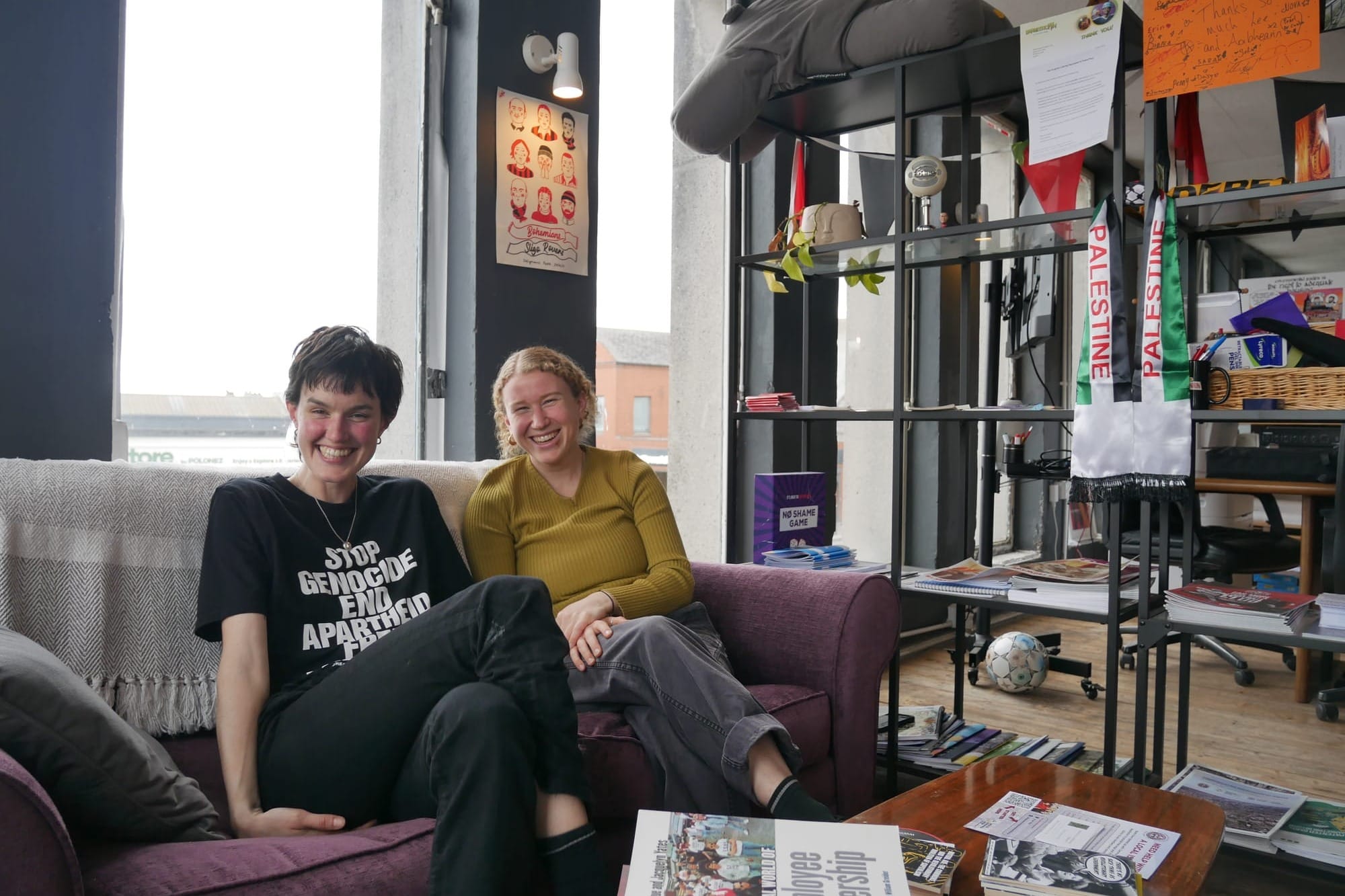
McCabe was sat on the couch in one corner of the office of The Spark project, a community climate cooperative.
The room is airy and industrial, on the second floor of the concrete Phibsboro Shopping Centre. Long strips of windows overlook the rumble of Phibsboro Road.
“They’re here to tell the city, and anyone who might be sceptical, that there are alternative economic models that can work,” said McCabe.
The guys include Ted Howard, the political activist and author and co-founder of The Democracy Collaborative in the United States, which aims to democratise wealth.
He also helped architect the Evergreen Cooperatives, a network of worker-owned companies in Cleveland, in the United States.
That is the main inspiration for the Bohemian Cooperatives CLG, the new entity that his team plans to set up, said McCabe.
Its role will be to incubate cooperative businesses across the city.
The deeper mission is to ensure decent work and stem the extraction of wealth, and to further just climate action, says the Bohemian’s Building Community Wealth Strategy 2026–2029.
The strategy, launched on Thursday evening, lays out how they plan to go about it, too.
The new Bohemian Cooperatives CLG won’t own businesses, said McCabe on Monday afternoon.
Its role is to provide the resources and strategies that cooperative start-ups need, to help them to navigate the nitty-gritty – and to make sure the wider ecosystem is one that supports it.
Indeed, said Katelyne Armstrong, project coordinator at The Spark. “This isn’t something that we want to own.”
“It’s definitely something that requires a lot of hands on deck, and a lot of partnerships and a lot of people on board to see it through,” she said.
The team has modelled its entity and strategy on what they saw during a study visit to Cleveland, said McCabe.
What has become known as The Cleveland Model grew out of the activities of a huge philanthropic foundation, said Howard, on the phone on Wednesday.
In the years after the last financial crash, the folks at the Cleveland Foundation began to seek a new approach to economic development to take on the extreme poverty in the area, said Howard.
They asked him to get involved, he said.
The community-wealth building model that Howard came up with involves democratic businesses, but also tapping into public and semi-public procurement from big anchor institutions.
Contracts with municipal governments, hospitals and schools, he said. “As they have such assets.”
The Evergreen Cooperatives approached the largest hospital system in the state, he said. It washes millions of sheets and towels and doctors’ gowns each year.
The Cleveland Clinic’s contract for all this laundry had been with the French multinational Sodexo, he said. “We worked to get the whole contract for Evergreen.”
It takes time, conversations and trust to shift big contracts, he said. “Institutions traditionally are looking for the lowest cost per unit.”
But there is also a growing attention to social procurement, he said. And at Evergreen, half the people employed had been incarcerated, and the cooperative had better environmental policies.
In Cleveland, the model has also meant buying existing businesses, once they meet set criteria, and turning them into cooperatives, he said.
They’ve bought a chain of coffee shops, and a small robotics company, he said.
Both of these strands – targeting anchor contracts, and buying up what’s here already – are approaches that the Bohemian Cooperatives CLG hopes to develop and adapt for Dublin.
The three-year Bohemian’s Building Community Wealth Strategy charts out two starkly different lines of businesses that the team wants to help nurture in the early years.
One “pathway”, as the strategy puts it, follows opportunities within the city’s food systems. That seems like low-hanging fruit, said McCabe.
Because there are clear “routes to market” with anchor institutions and contracts for school meals and institutional catering.
The idea of community wealth building isn’t totally alien.
Dublin City Council has since October 2021 had its own stream of work trying to use its heft to support community wealth building. It has run pilots around procurement and hirings.
The Bohemians Cooperatives will complement that, said McCabe. They intend to look for ways to dovetail with the council’s goals, he said, but there are also many other big institutions across the city.
The plan is to bring in a food systems expert for a year to develop that idea, its feasibility and possible partners, and what would be needed to move it into an enterprise start-up, the strategy says.
Once set-up, the independent start-up would take on the costs and risks.
It would also step towards restructuring Dublin’s food system “connecting public procurement, nutrition, decent work, local production and shared ownership in a way that is highly legible to partners and communities alike”.
A second “pathway” is for an insurance mutual company. “We’re not preempting what it would look like,” said McCabe.
Again, the plan is to hire an expert to refine the idea. But the pitch is for a new insurance company, owned by its policyholders, into which – as the strategy says – many people pay premiums so that the few can benefit when they suffer an unforeseen financial shock.
The strategy sketches out an ambitious trend line, which sees the company hitting profitability in year three.
The insurer would serve a wider purpose, said McCabe.
They want to try to replicate how the Evergreen Cooperatives buys and converts existing businesses to worker-ownership, he said. “It’s a for-profit insurer, but all of the profits would recycle through the system.”
The Cleveland Foundation gave €10 million to the Evergreen Cooperatives to scoop up and convert businesses, he said. But Bohemians don’t have that.
McCabe said he could foresee investing about €1.5 million to €2 million in each company which meets certain criteria around employee numbers, and that can reach expected dividends of around €10,ooo a year within five years.
“That’s kind of the parameters,” he said.
Many pieces need to be put in place for all this to work, he said, including large amounts of money to capitalise it.
They’re working to find those millions, he said. “But if it worked, it could be really transformative.”
No system is perfect mind, said McCabe. One cooperative-owned factory that the team visited in Mondragón, in Spain, as part of a study trip made munitions.“They will be a reflection of the values of people that live within them.”
Not everybody wants to join worker-owned cooperatives, said Howard, cofounder of The Democracy Collaborative.
“The plain truth is that lots of people would rather work for somebody and do 9 to 5 and earn an income,” he said.
Others are drawn to cooperatives though, he said. “And interested in having a real voice and say in the company, helping to make decisions on allocation of finances, and board members.”
There is, of course, a risk, he said. “Because you’re an owner of the company and you’ve capital in it.”
Howard said that to find people to work at the Evergreen Cooperatives laundry service, they ran events, meetings in churches, and collaborated with an NGO which helps people who are long-term out of the labour market.
They had a mural on the building too, he said, and hundreds of people knocked in to ask about jobs. “People knew something was happening.”
They hired people and, in the first six months, worked out whether they were reliable and understood the cooperative spirit, he said. “And so they moved after six months, if so, to an owner of the company.”
As with the Evergreen Cooperatives, McCabe sees the Bohemians Cooperatives CLG as working for those who are most excluded.
One issue then becomes the buy-in, how owners can afford to buy shares. For the laundry, the buy-in was $3,000.
There are ways to deal with cash-poor owners, said Howard. In the laundry, when somebody becomes a member of the co-op, they get a raise of $1 an hour in their salary, half of which is put into a fund towards the buy-in.
Those working full-time earn their share in the company outright within three years, he said. When they retire, they get the $3,000 back and the company gets the share back, he said.
Where he is working now in Amsterdam, they are starting a cooperative in the low-income neighbourhood of Nieuw-West. To start at least, they’re not even setting a share price, so people become members for nothing, he said.
Meanwhile, owner-staff get dividends, some of which they pocket and some of which go into a capital account that builds up and they get when they retire or leave the company – but can often borrow against in the meantime.
McCabe has had a whole series of events running alongside the launch of the strategy this week – roundtables with councillors, TDs, and civil society groups.
And, there’s the community open day on Saturday at Dalymount. There are to be stalls, inflatable toys for kids and the bar will be open, said McCabe – as well as the soapbox speeches.
Howard says that one learning from Cleveland is that you can build a network of successful cooperatives that benefit those within them, but it won’t necessarily touch the whole community.
Many in Cleveland don’t know much about it, he said. “That broad education and dialogue hasn’t really been done.”
Visiting Mondragón, as part of the groundwork for this new strategy, drove home the importance of cooperative culture, said India Ryan, the climate cooperative office manager.
Education and outreach is to grow under the new Bohemian Cooperatives CLG. It builds on The Spark’s work so far, and its eight-week skills programme teaching bike mechanics, energy efficiency skills, and getting people to understand their own value within a community too.
Soon, they’ll be kicking off “care and repair” teams, said Armstrong.
Gathering people who have gone through Sparks Skills already to go door-knocking and volunteer to help out with small repairs and upgrades, she said.
The team is expecting to move into a new space soon too. It’ll have more of a front onto the street, and be easier to find.
They’re looking to expand its Democracy School, said McCabe, helping people to critically understand how the world is working and nurture spaces for people to come and have good-faith debates.
“We haven’t fully worked it out yet,” he said.
Howard said that if the team manages to grow that culture, they’ll have succeeded in a way that hasn’t really been done so far.
“You want people to stand up and say we want the city to be investing in cooperatives that we own and community wealth building, and not just traditional economic development,” he said.
It won’t come fast, said Howard. In Amsterdam, the community wealth building strategy takes a 20-year view, he said. “It takes time to rewire the very basis of an economy.”
Arguably, part of the cultural change needs to happen not just within communities, but also in the chambers of government and the minds of investors and philanthropists.
The Bohemian’s Building Community Wealth Strategy 2026–2029 includes a commitment to lobbying on policy.
They’ll push for progress on moves such as the Co-operative Societies Bill, said McCabe. The Departmetn of Enterprise published the bill’s general scheme in 2022.
There are reasons it hasn’t crossed the finish line, said McCabe.
It’s a massive bit of legislation, he said, but also nobody is that stressed about getting it through. But “we need people to prioritise it”.
Meanwhile, investors need to buy in even if they could maybe make more money elsewhere, said Howard.
Philanthropic donors can often also fund projects for a few years and move on with a new priority, said Howard. “That’s a big challenge.”
But the idea isn’t to rely on outside money to prop up cooperatives and the network forever anyway, he said.
It’s to use grants, loans, subsidies, to build profitable companies. “We can’t rely on being saved by some external forces,” said Howard. “We’ve got to do the work to become independent and stand on our own.”

“If you read any research with care-experienced voices – every piece of research talks about the importance of continuity of care.”

Vestry Limited Partnership owns more than 1,000 homes across Ireland.

“I'd be amazed if it’s not used in some form everywhere now,” says Michael Marsh, the editor in chief for Reach Plc in Ireland.

“We're actually at a pivotal moment in Ireland with regard to our drug policy,” said one speaker, at the inaugural event of the Irish Coalition for Drug Reform.