It'll fill it with water, and decorate it with lights this winter, a council manager said at a recent meeting. But it'll take years to come up with long-term vision.
"I think the public do understand that prison isn't addressing the underlying issues for those people who are committing minor offences but can't get the help that they need to stop that cycle."
At a recent meeting, councillors tabled three motions calling on the council to renovate the pitch, but council managers said there is no plan to do that at the moment.
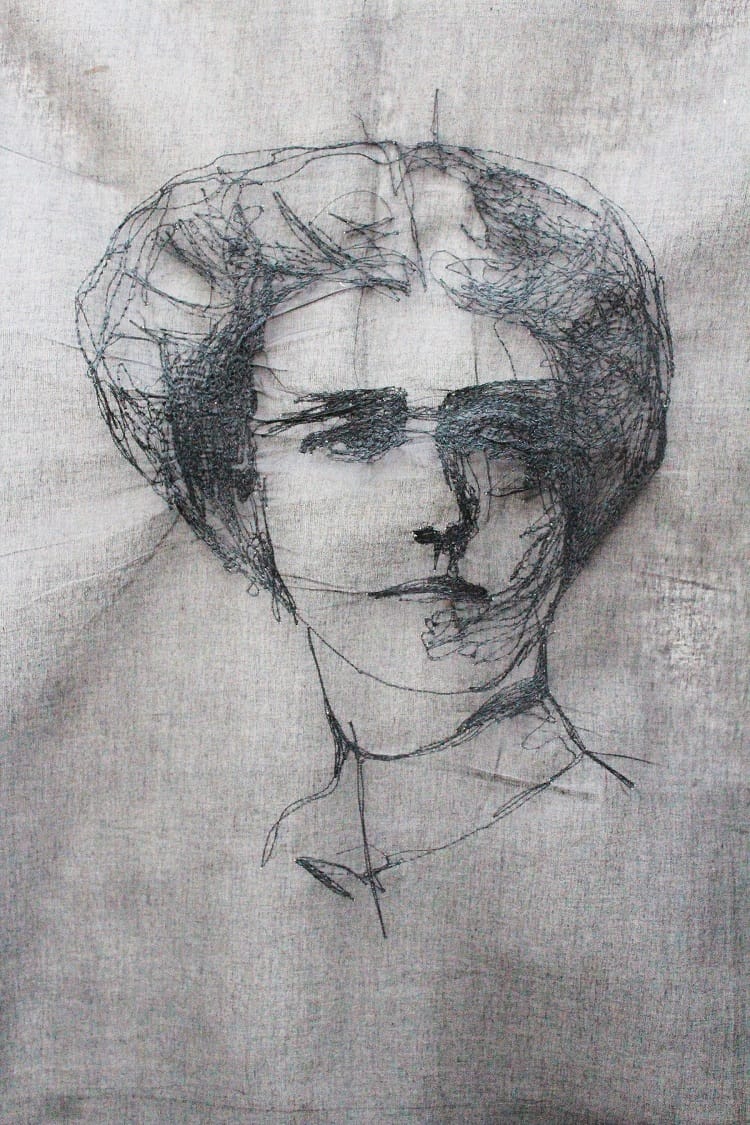
In her portraits of the widows of the 1916 rising, artist Ciara Harrison seeks to capture the complex emotions of those who were left behind. This is just a detail – click through to see the whole portrait.
Kathleen Daly, from the series Shadowed Women By Ciara Harrison Cotton organdy, thread, copper Seven panels of 0.5m x 1m
1. This work is about . . . The collection features seven portraits focusing on the wives of prominent rebel leaders. These delicate and sensitive works give recognition to the commitment, sacrifice, intellect, bravery and loyalty of the women who lived in the shadows of the 1916 Rising. The personal narratives of these women have been marked in Sinead McCoole’s Easter Widows (2014), which details the stories of seven couples and the subsequent lives of the women after the losses of their husbands.
2. I made this work because . . . I wanted to visually commemorate the survivors of the Rising. The situation for many women who were widowed after the fighting was dire. The death of their spouse resulted in the loss of their household’s income. Many were left in financial and emotional turmoil. I wanted to expose this aspect of the Rising – the human, emotional side for those remaining or left behind.
3. I hope when people see this work they will . . . reflect on the lives of these women and other survivors of the Rising. The detail in the work can only be seen on close examination. This encourages the viewer to spend time with each woman, as they become more than just wives of rebel leaders: examples of human strength and sensitivity in the face of adversity.
4. In terms of art history, this work . . . is historical in theme. The portraits are produced on a delicate, paper-like fabric called cotton organdy. The portraits are inspired by charcoal drawings I created of each woman, and these drawings are then transferred to the fabric with the use of a sewing machine. The machine stitching, rather than hand stitching, replicates the energy and movement of the charcoal drawings, giving life to the works.
5. You can see my work . . . in the Little Museum of Dublin until April 2016 or at www.ciaraharrison.com
Curios [sic] About is a series featuring works by Dublin artists, curated for us by our friends at the Square in the Circle blog, and hosted there as well as here.
Each artist is asked to submit an image of one work and answer a set of questions about it. We’d love it if you’d submit something you’ve made.
But viewers seeking a beat-by-beat summation of jazz musician Bill Evans’ career will be disappointed by Grant Gee’s film, which is not meant to be a biopic.